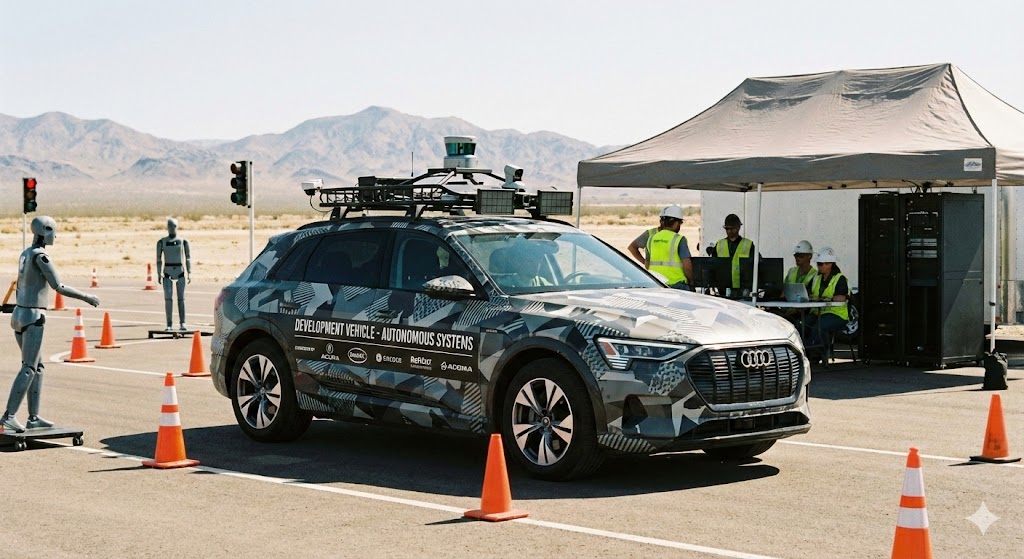

Autonomous cars collect huge amounts of sensor and vehicle data, and this data must be organized and checked before it can be used to prove the system is safe. Data ingestion to V&V is simply the pipeline that moves raw data from test cars into clean, trusted datasets that engineers then use to verify and validate self‑driving functions.What data ingestion meansData ingestion is the process of copying raw logs from the cars (cameras, lidar, radar, GPS, CAN, etc.) into a central storagesystem where it can be processed.Along the way, the data is checked for basic quality (file integrity, missing chunks), organized by trip and sensor type, and indexed so it is easy to search and retrieve later.How it connects to V&VOnce ingested and cleaned, this data feeds verification tasks such as replays, regression tests, and performance checks for perception and planning models. Engineers use it to see if the software meets its requirements under many different real‑world situations.The same curated data also supports validation, where teams check whether the whole system behaves safely and as intended in its target environment, often by turning real logs into scenarios for simulation and safety evidence.

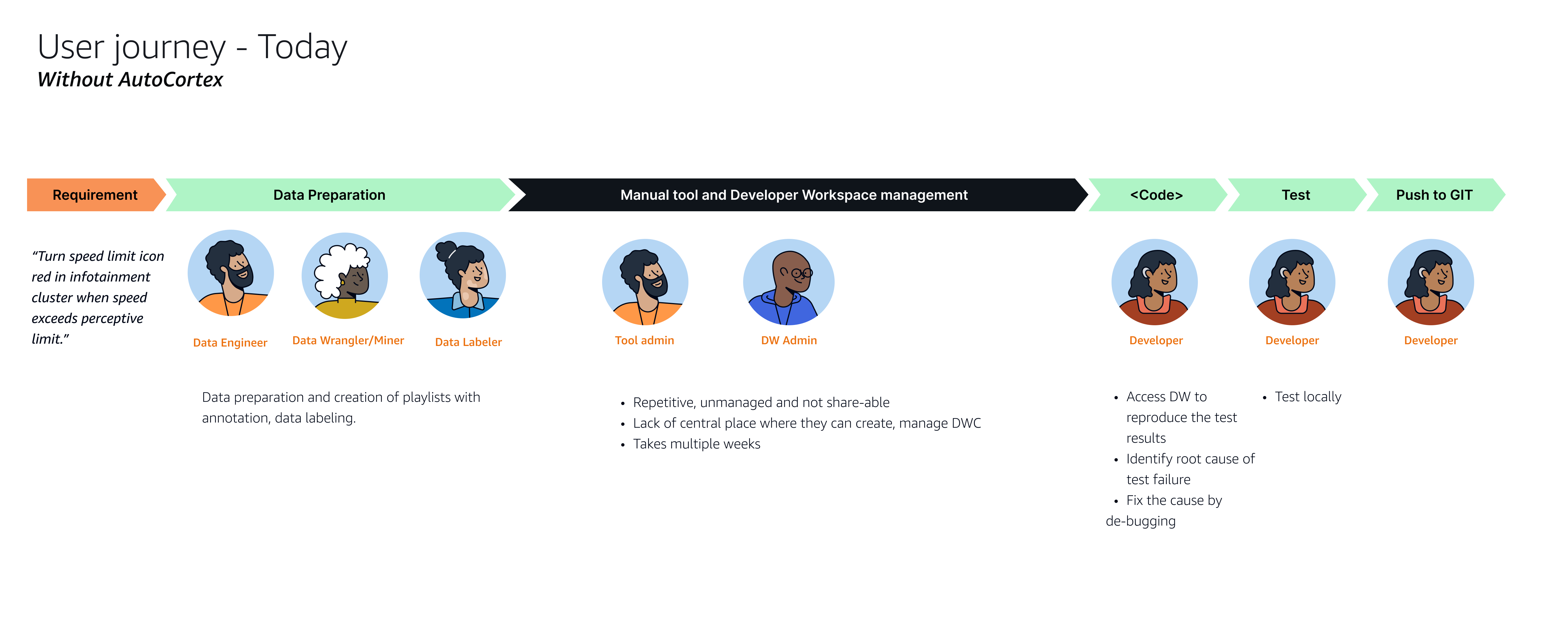
The existing workflow required manual integration such as onboarding set of tools to developer machine that will allow them to use simulation softwares, CLIs/developer tools, and testing softwares so that they could conduct test for self driving feature test.
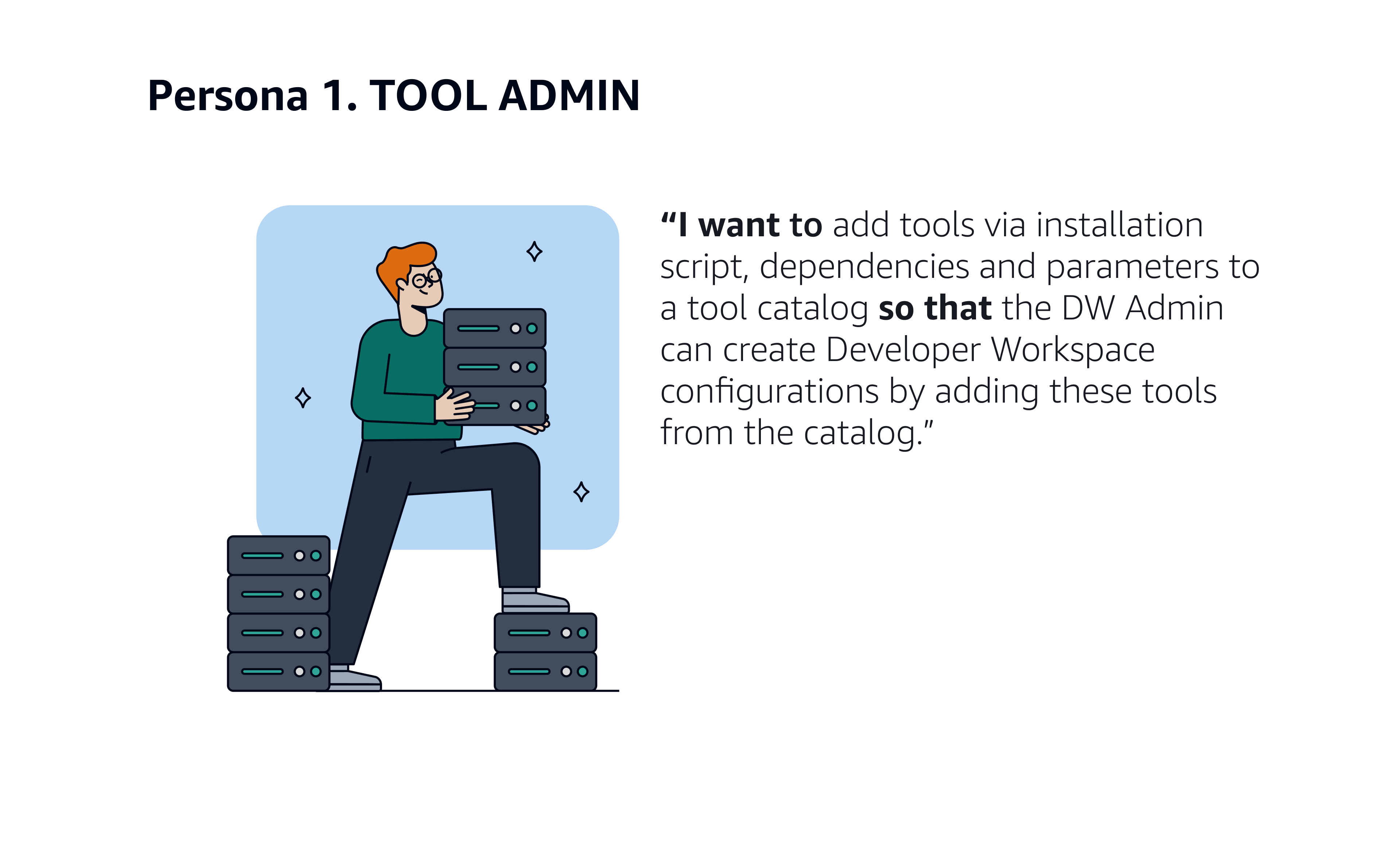
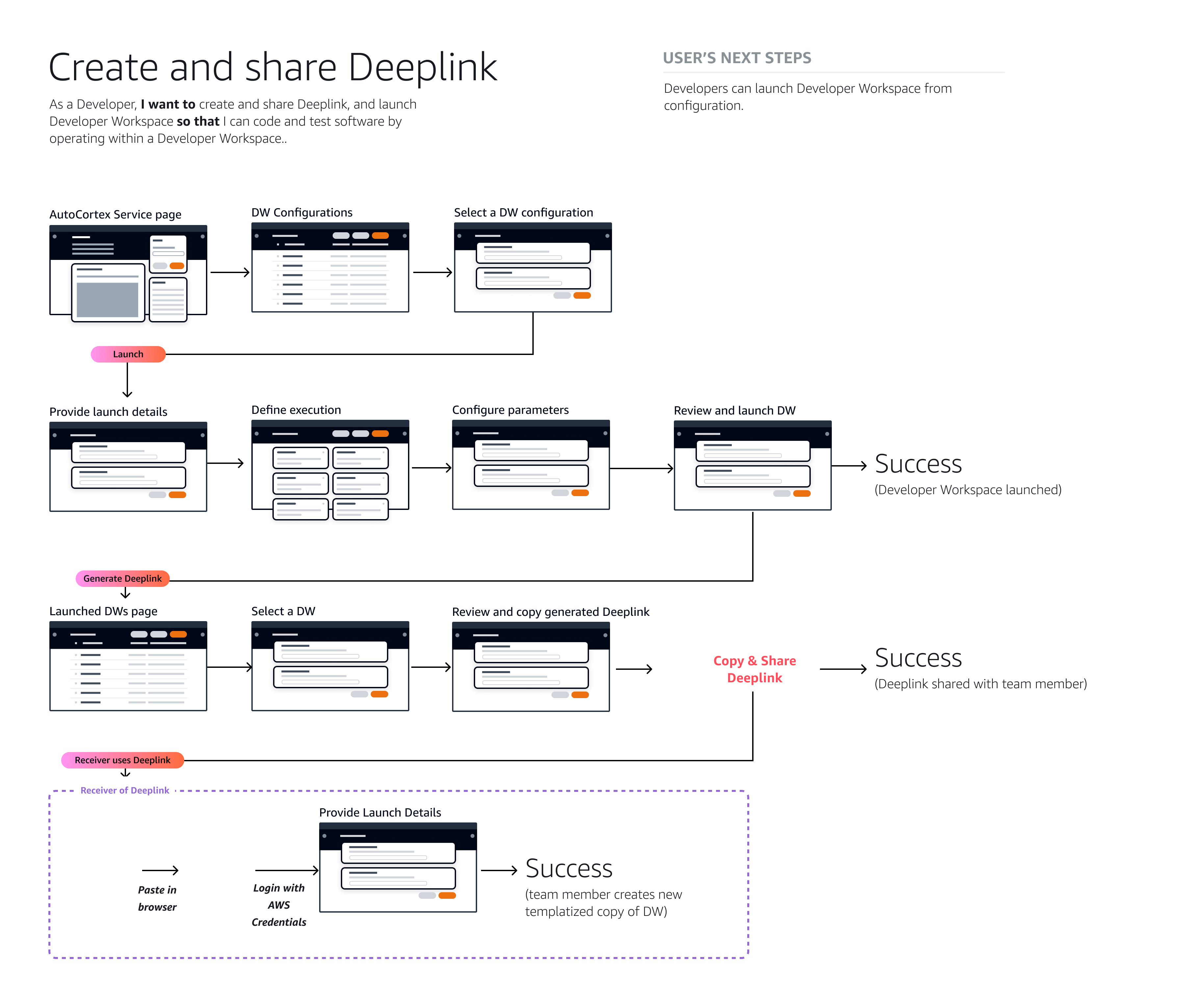
After researching and interviewing the Tool Admin, Data Engineers, Workspace Admin and Developers, I learnt the process core challenge in the workflow where the integrations can be simplified with designing an interface for AWS console. The console would allow tech users mentioned above to create a software tool catalogue, maintaining tools, configure an Amazon Machine Image to provision a EC2 instance, and generate a DeepLink (an access link directly in to the workspace with all the tools, softwares installed) that allows any developer to access the Developer Workspace in no time.
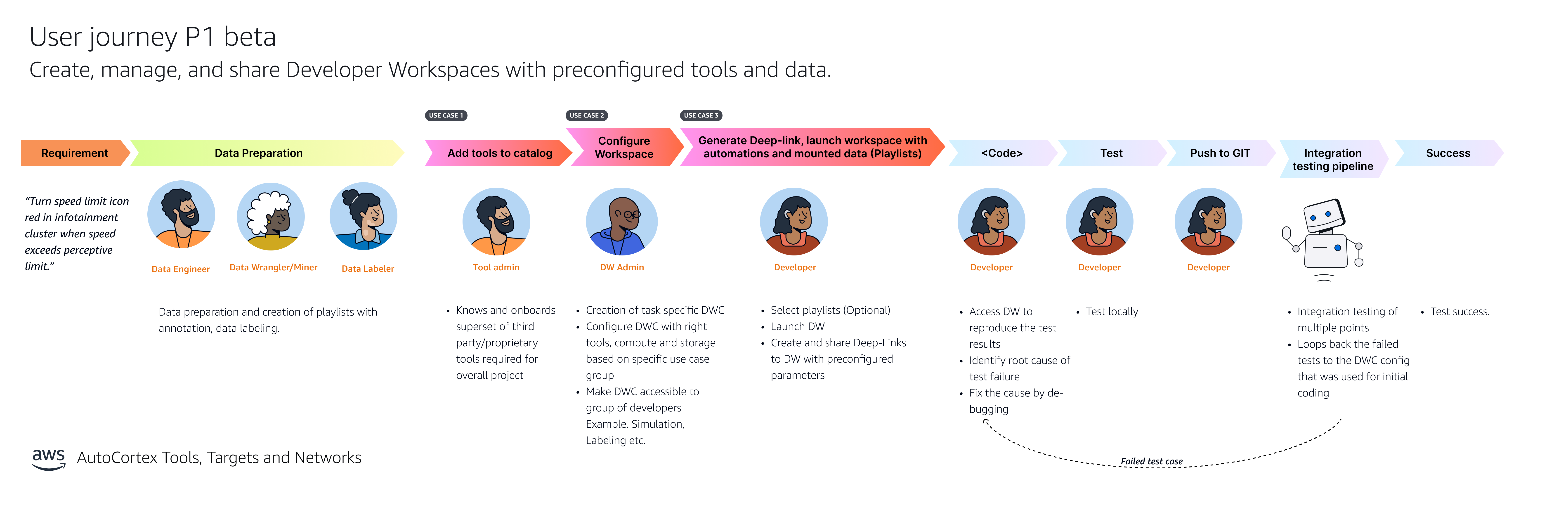
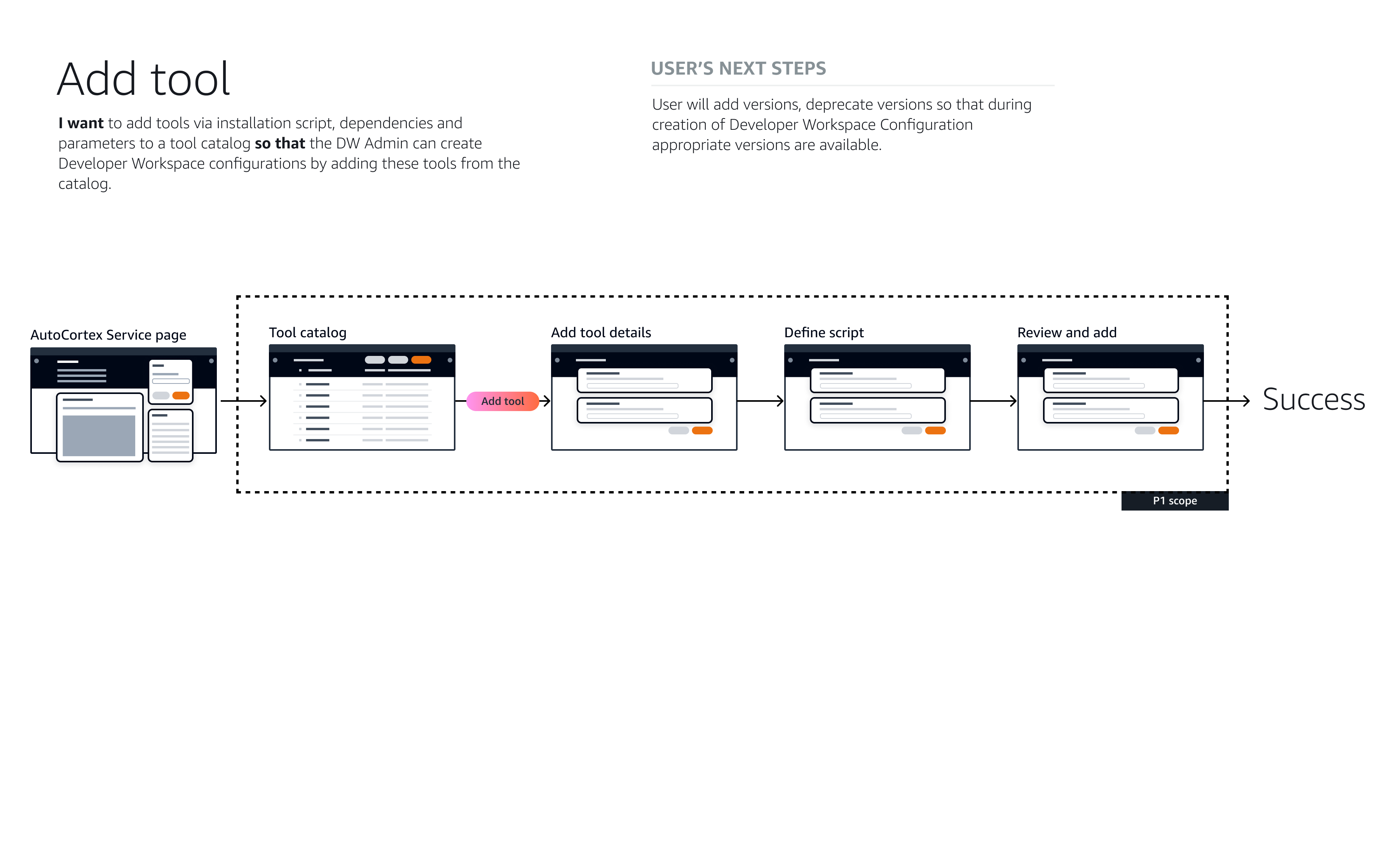
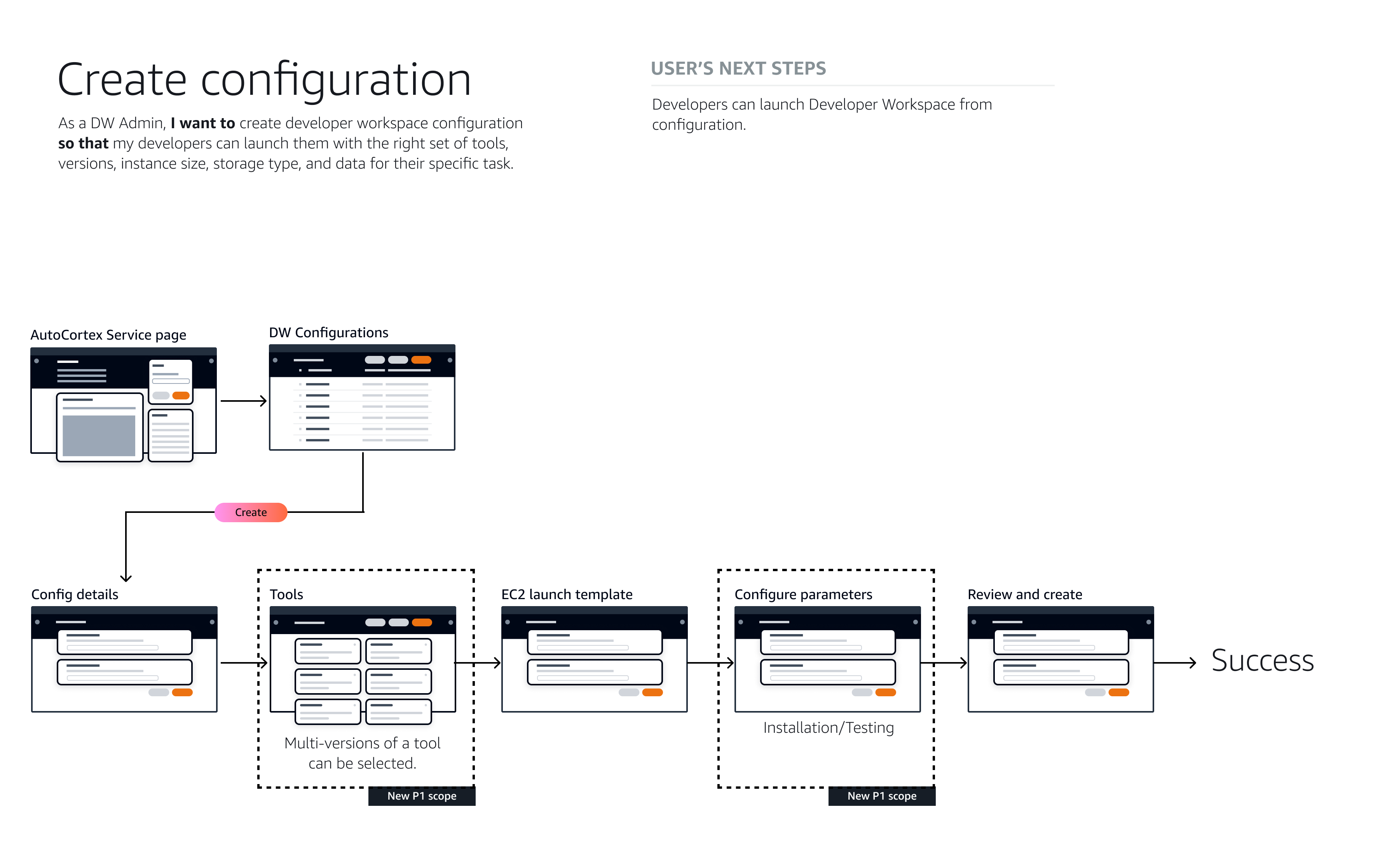
The workflow diagram showcased below shows the necessary capability of AutoCortex Beta console experience that allows users to set up Developer Workspaces accessible to 100s of developers in one time. Manage and orchestrate the software version auditing cross the workspaces in such way that the entire organization's tool catalogue is audited, and follows the due diligence for software versions deprecation.


In the new workflow, I simplified the process for Developers that earlier required them to build bespoke solutions. I designed a simple solution that integrates the tools catalogue where:
1. They can select the suitable toolset needed for the vehicle testing. This included searching, filtering, selecting tools with specific versions. The interface choice was such that it allows users to view the tools in list view with basic details. and the details view on right side panel that allows them to configure additional settings.
2. I crafted a workflow that required me to conduct deep dive workshop with SDMs and SDEs. The goal was to design the interface to integrate EC2 Launch Templates with the new workspace allowing Developers to operate hundreds of tools with the right sized compute provisioned as a result of choosing a EC2 instances.
3. Configuring the Key/Value parameters that allows the softwares to install and run automatically for each software testing job.
4. Access, manage the configurations of workspaces for the organization.


Impact of this Beta product:
The product was designed and validated with the leading Automotive manufacturers, and Tech Companies within Europe and America. The software was well received, and achieved the goal of identifying a niche, market fit. Within a year we launched this product as General Availability addressing wider audience, manufacturing companies.
The product is still being refined for new use cases that are critical for companies to solve, agentic integration and more.
My role as a lead of the User Experience was to research with customers around German manufacturers, software providers to identify the high value workflows where AWS capabilities of cloud integration could speed up, transform the current vehicle software and hardware testing workflows.
As a lead, I provided strategic support to define, shape the core value proposition of a software, that ensured the engineering capabilities for companies are enhanced with integration of this new beta software. I constantly iterated on ideas, by conducting workshops with SDMs, SDEs, Tech Evangelists, Data Scientists, Algorithm Developers, DevOps and more. My role was be the bridge between product and engineering to evaluate, translate and build capabilities that can be delivered as core offering, ensuring the engineering capabilities are built to support the business ambitions.
As a result a market fit was identified and UX delivered a software that is a stepping stone in to the self driving car market worth $40 billion to $79 billion in 2026.