Compute agent
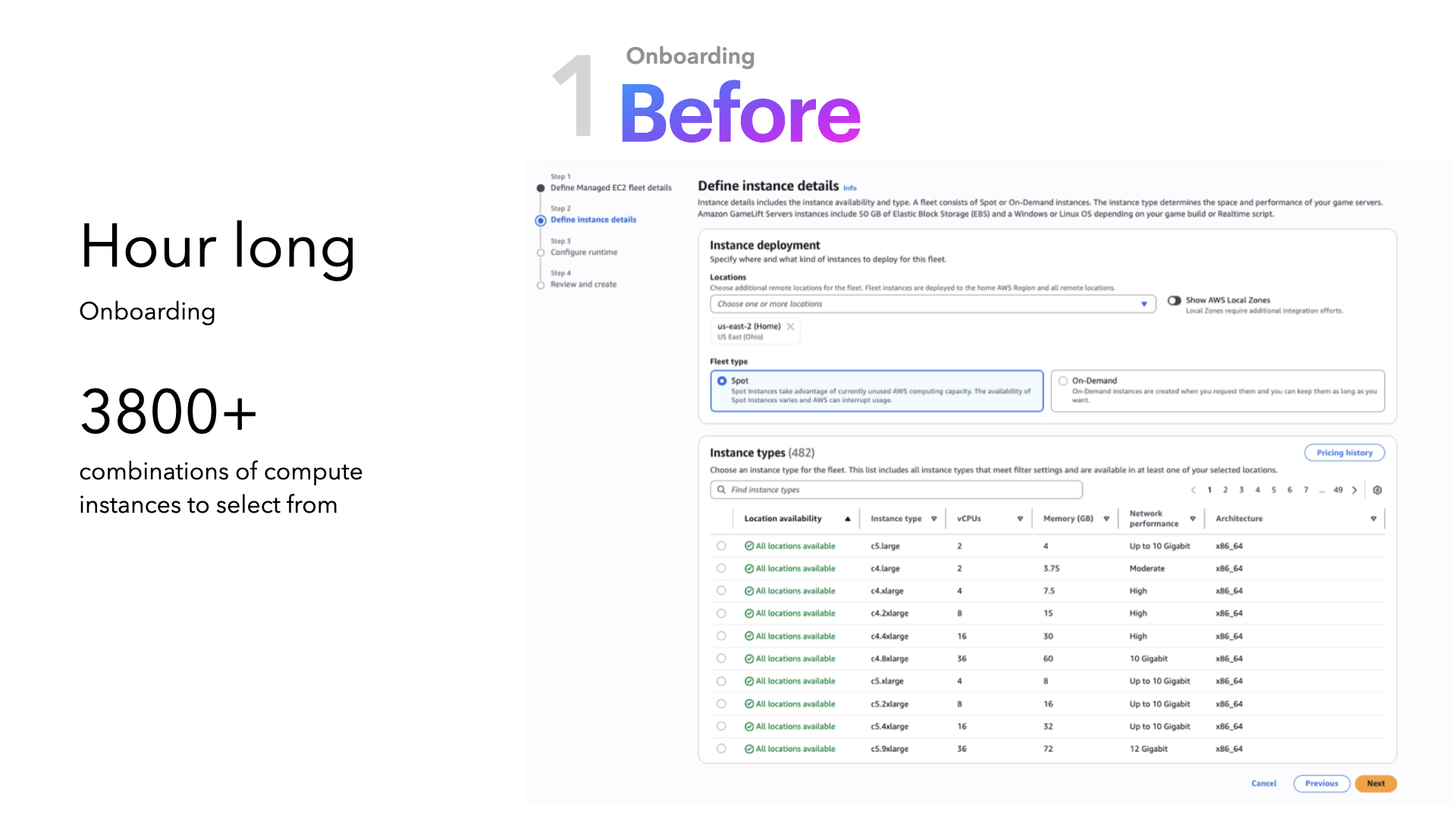
AWS GameLift streams and servers combined capability to build a agentic application for Game Enterprise customers to build server, compute at scale in cloud.
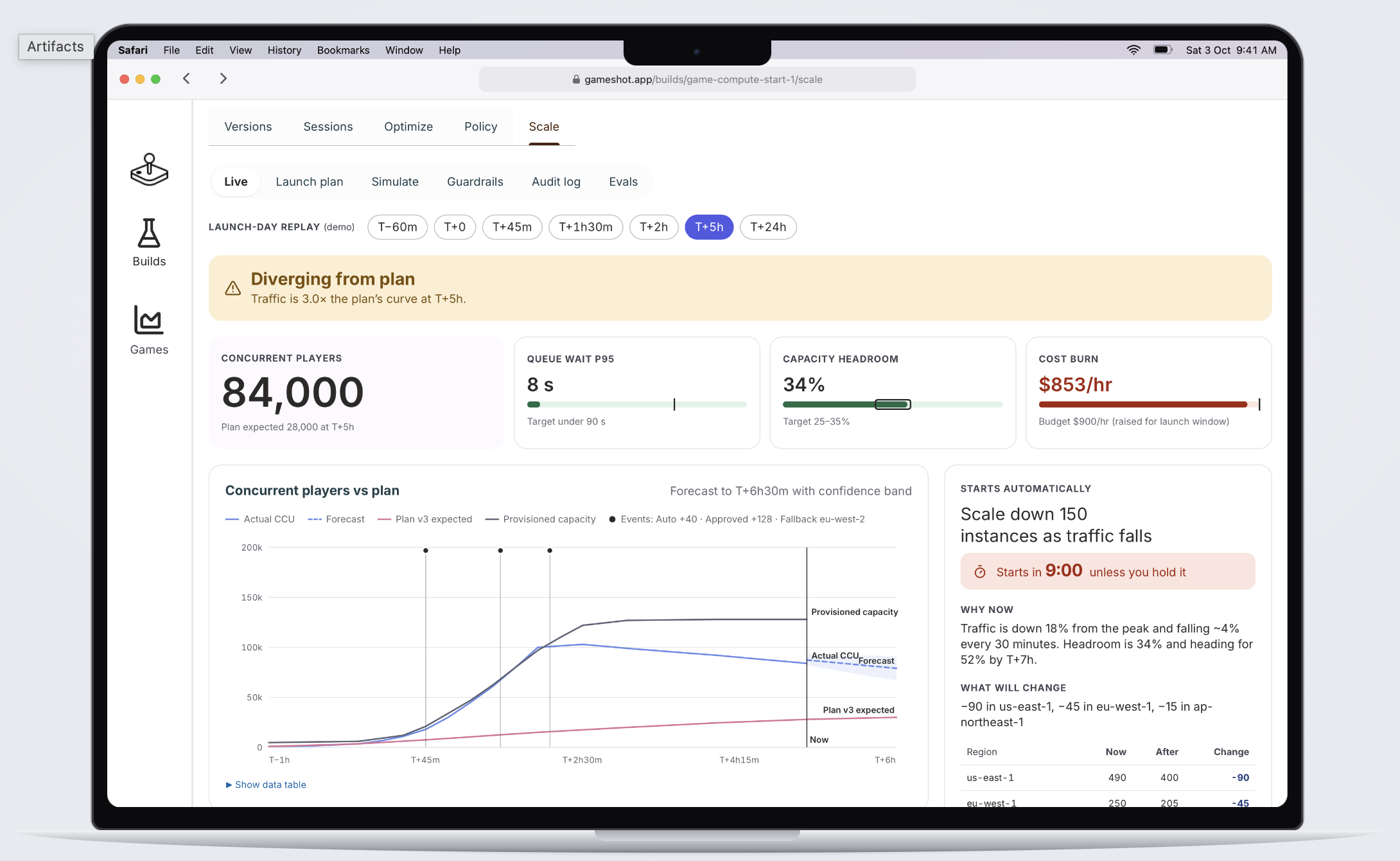
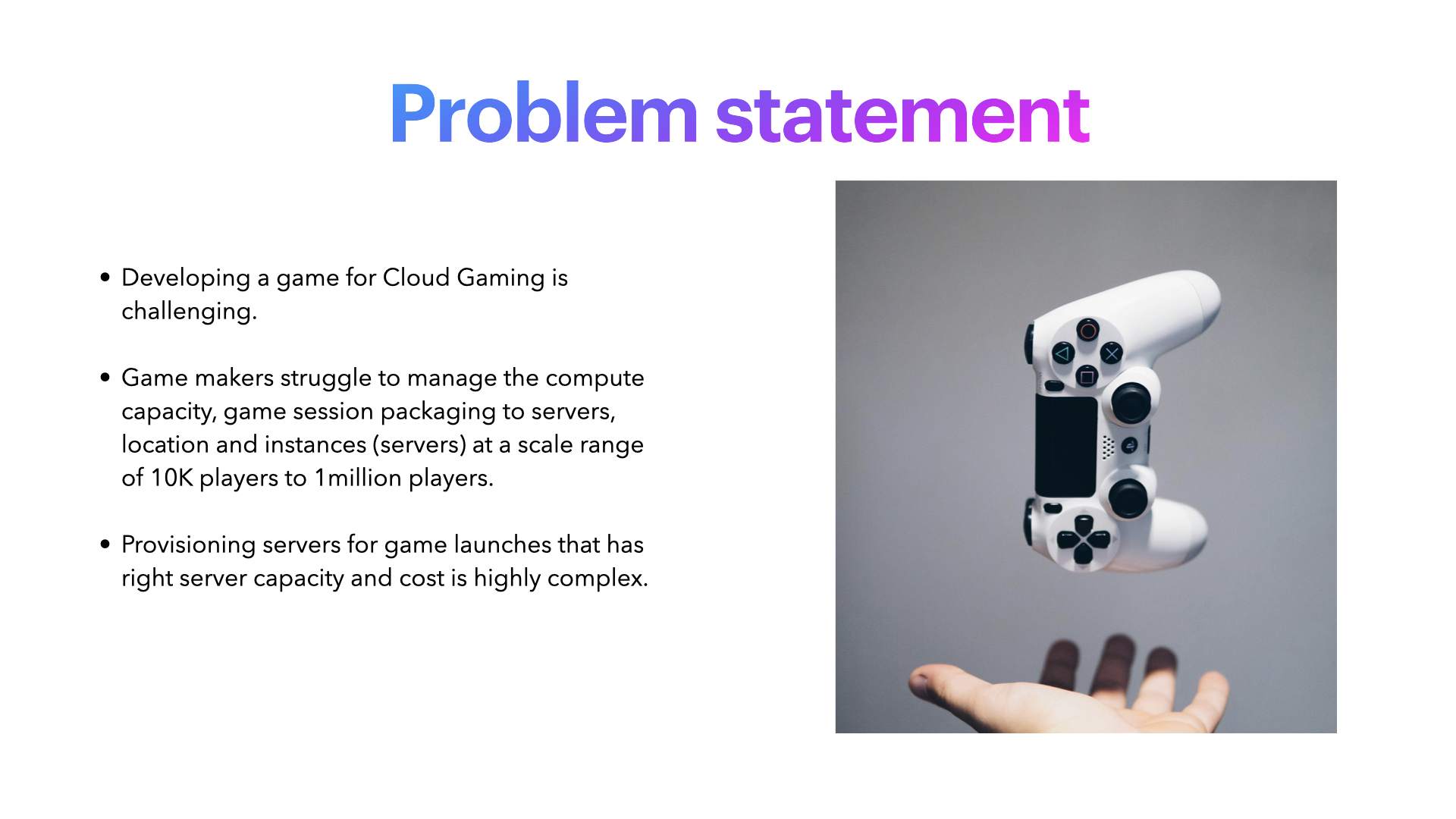
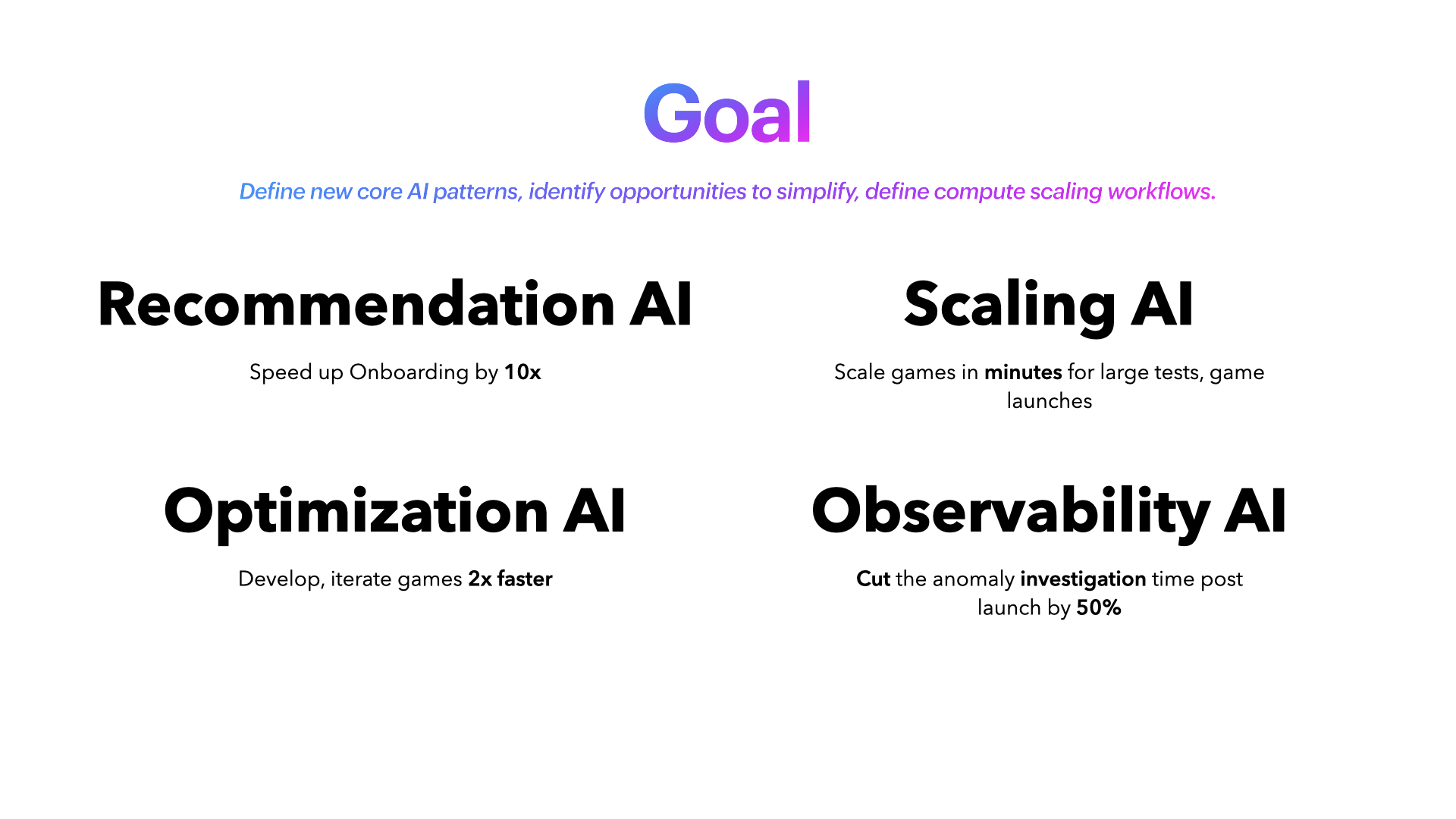
The goal of the project was to allow the Developers to optimize compute for sudden surge in concurrent players, deploy in cloud, scale the compute, visualize the launch day scenarios.
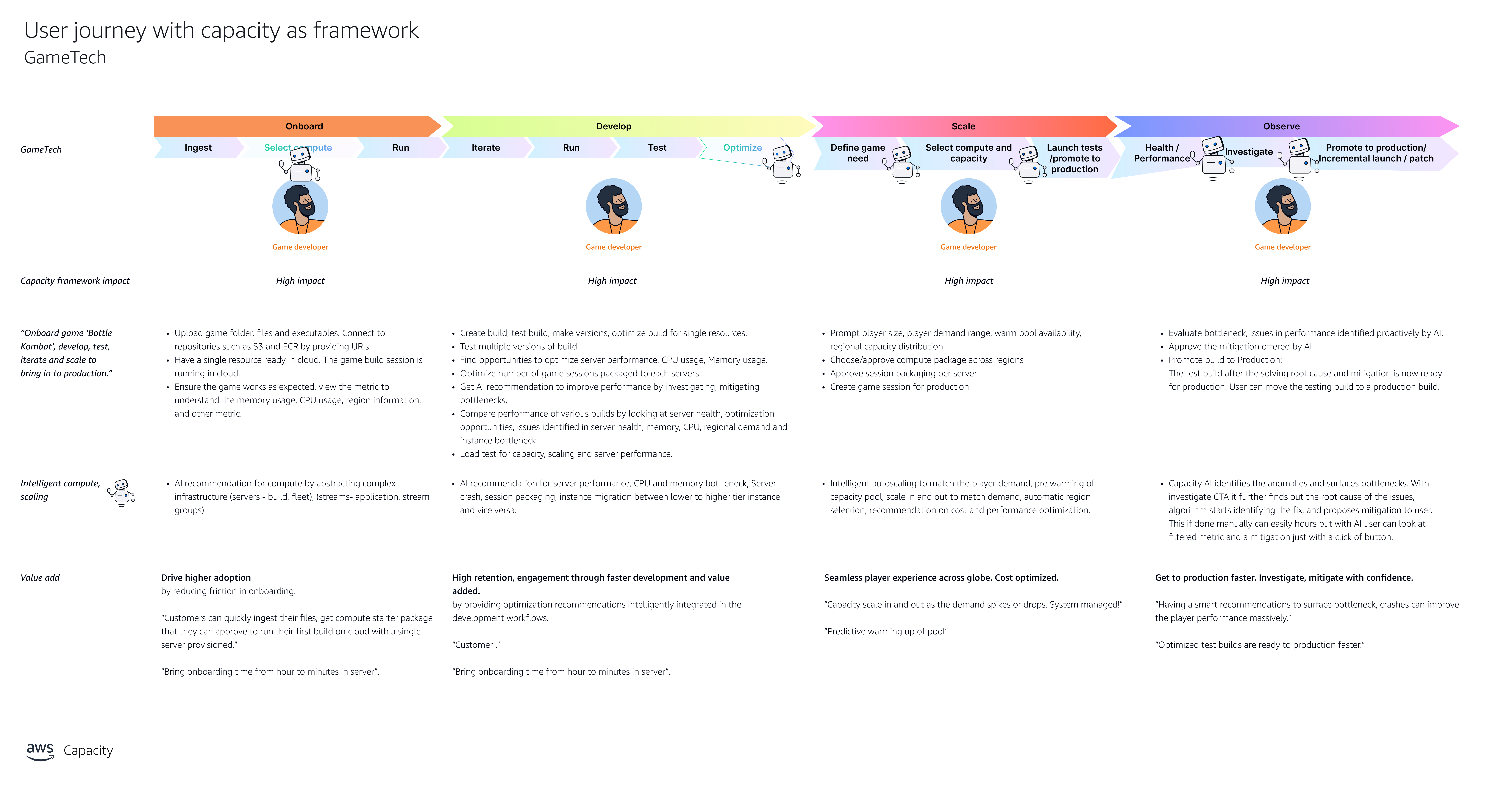
Intelligent scale and optimize workflow
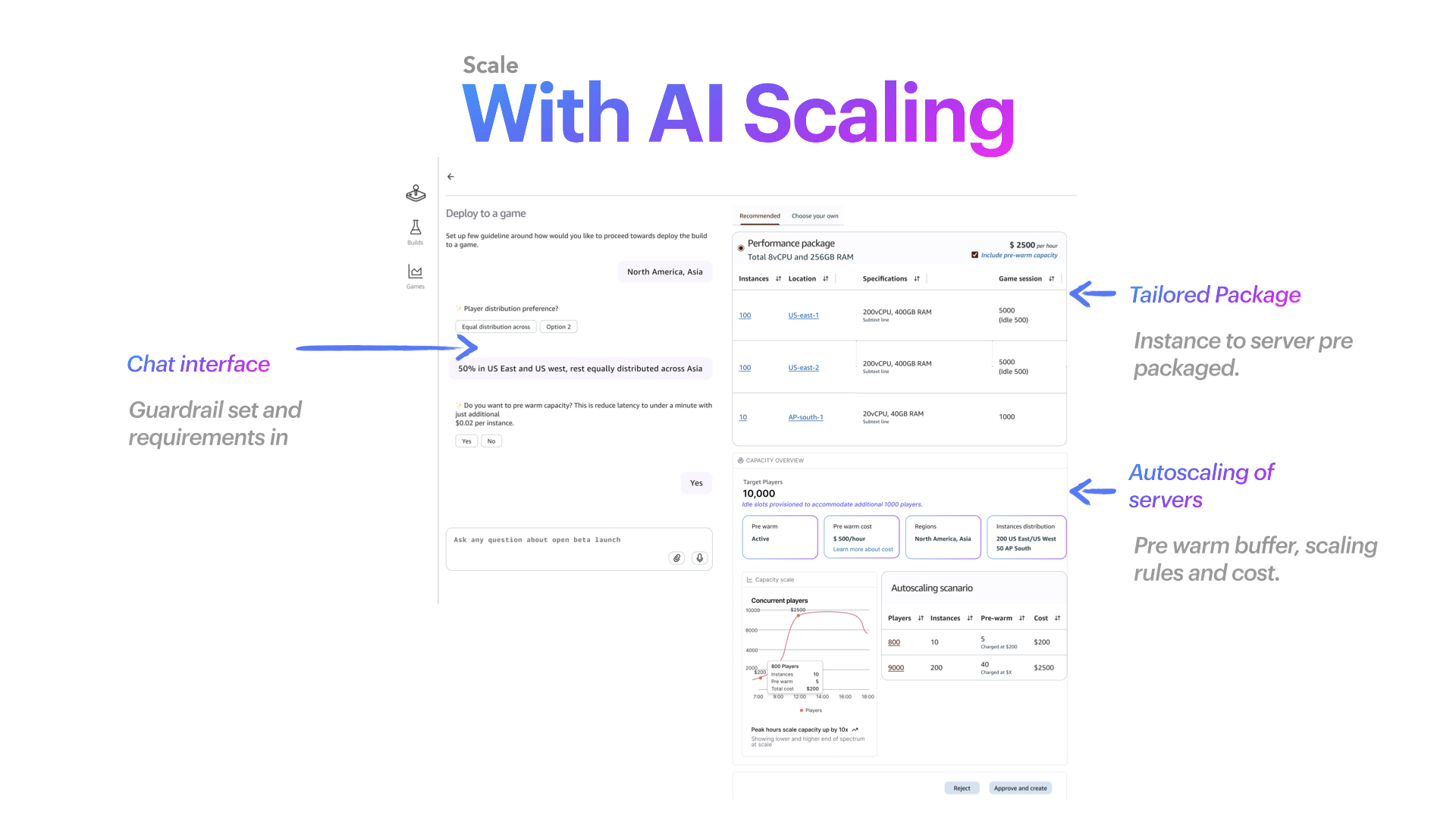
The goal of the project was to enable customers to scale the servers as the concurrent players join a game. The workflow would allow developers to optimize cost, and server performace by optimizing vCPUs.
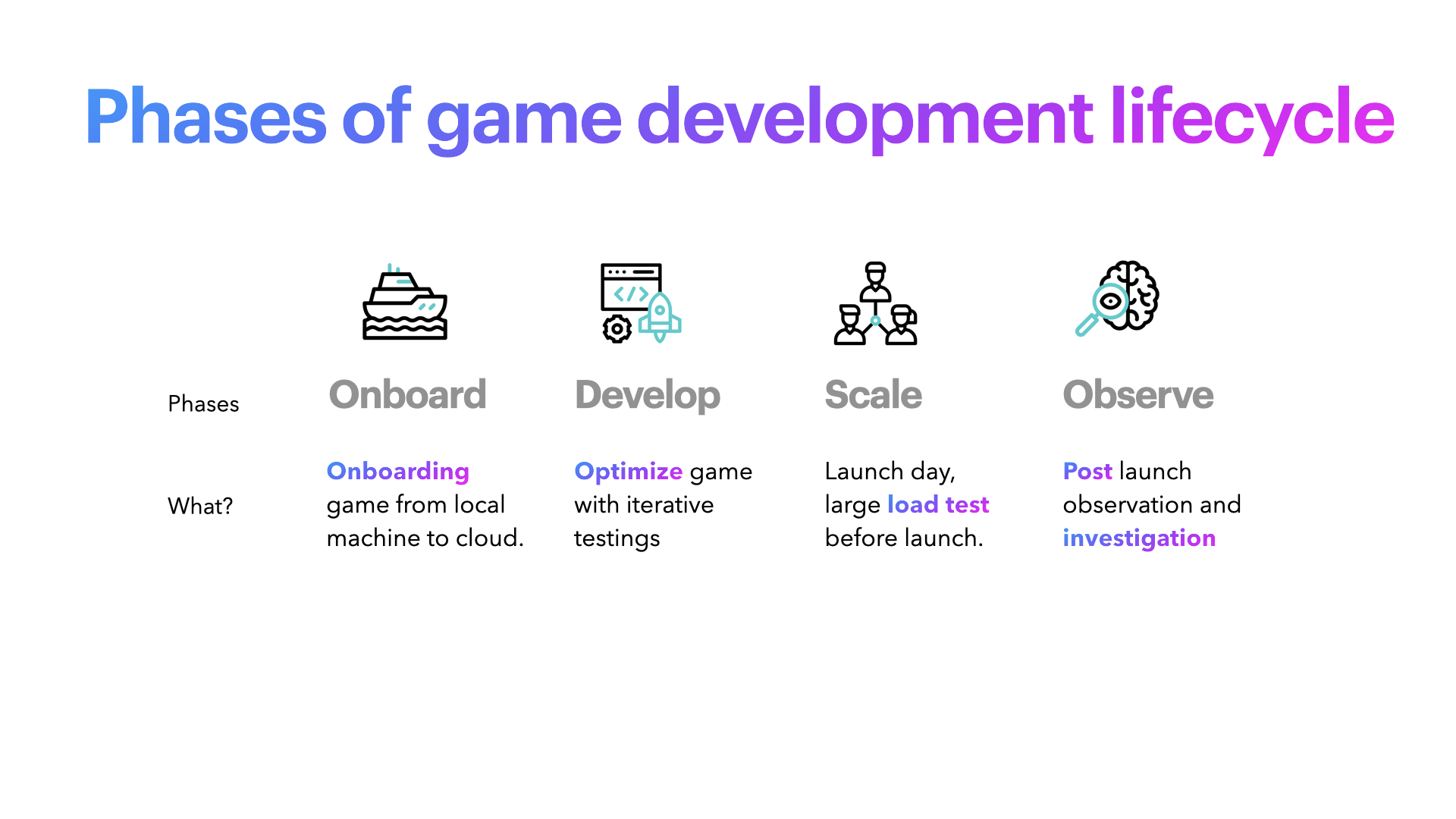
Scale a game from open beta to launch day.
The Problem
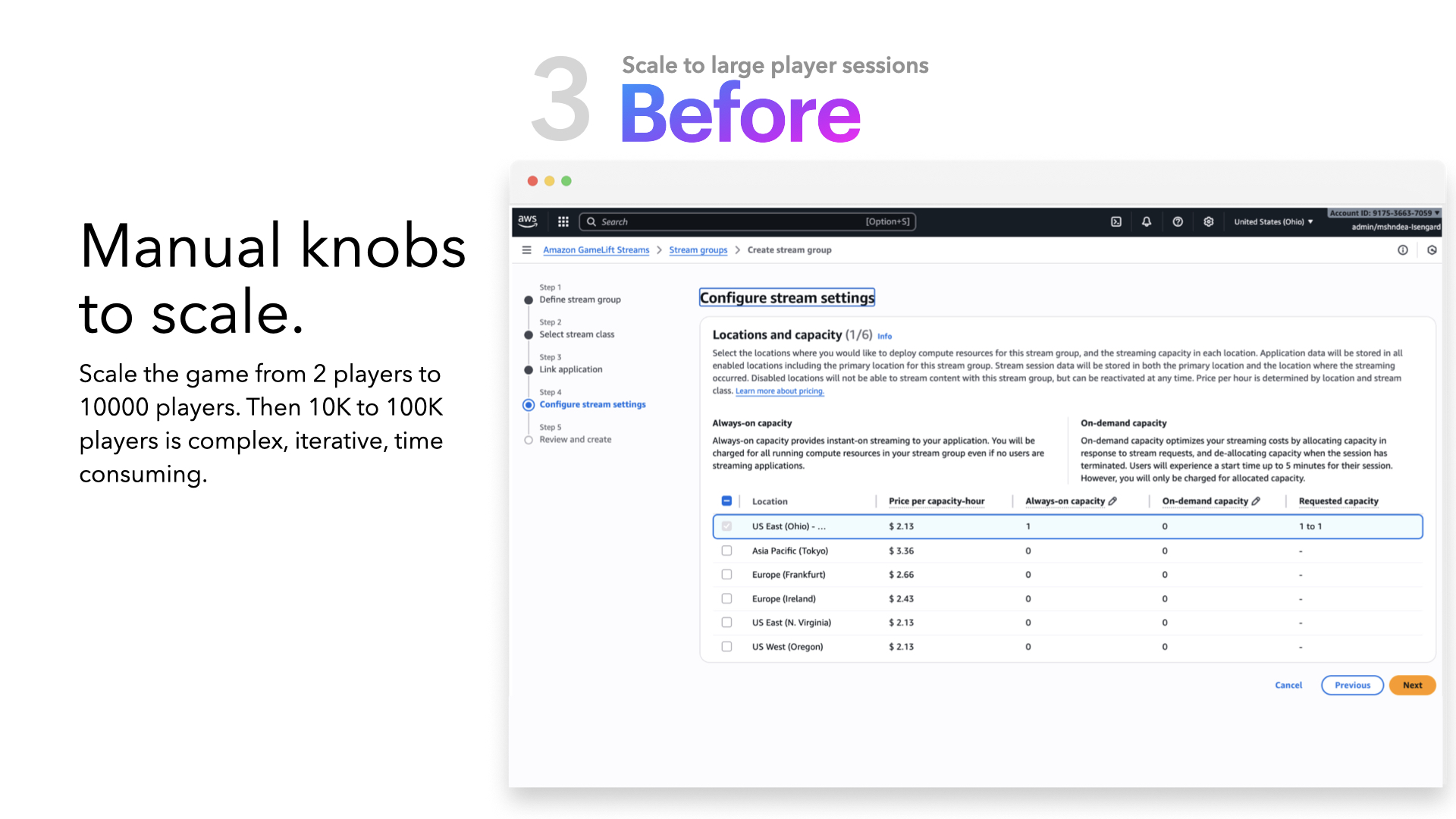
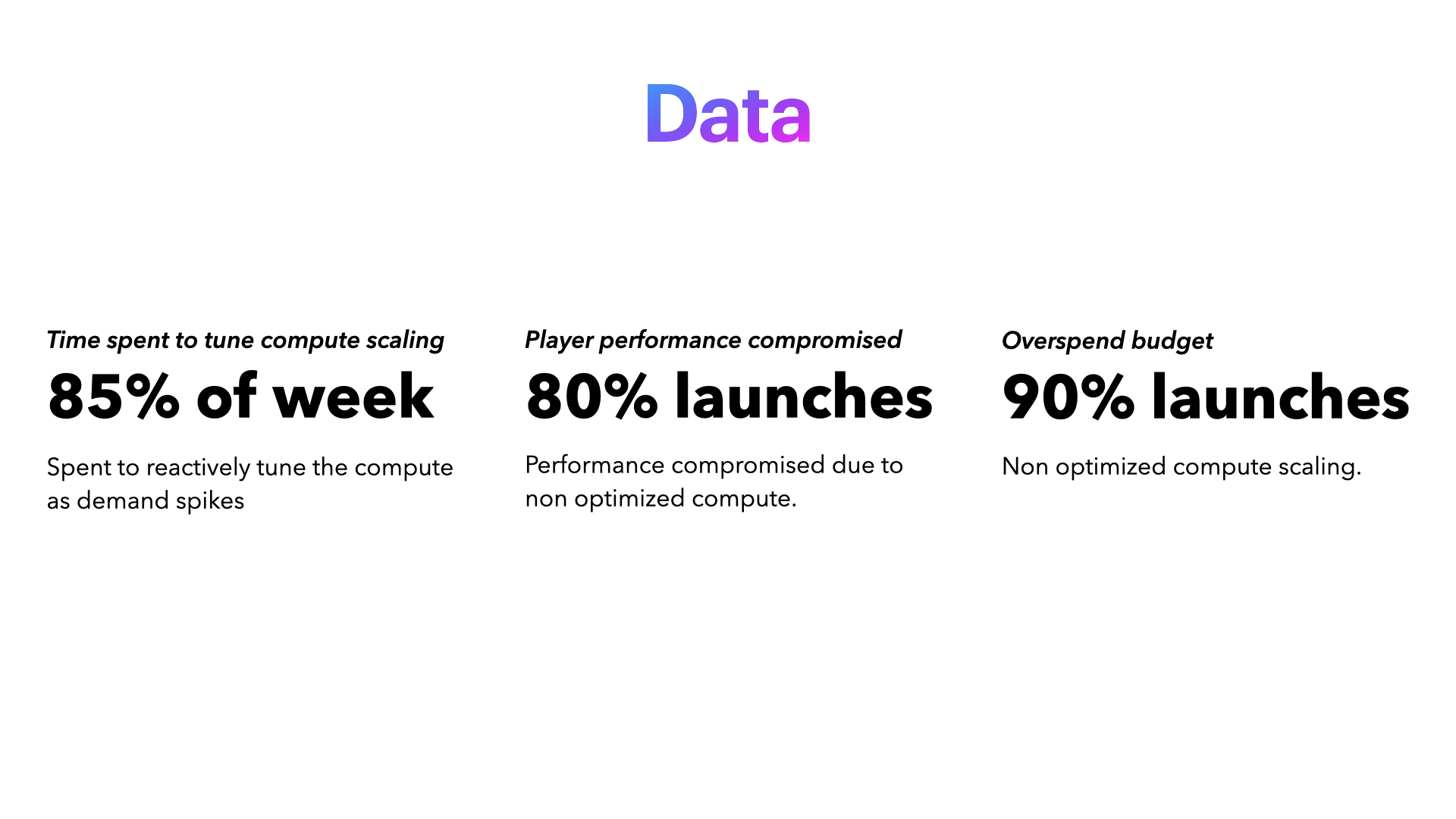
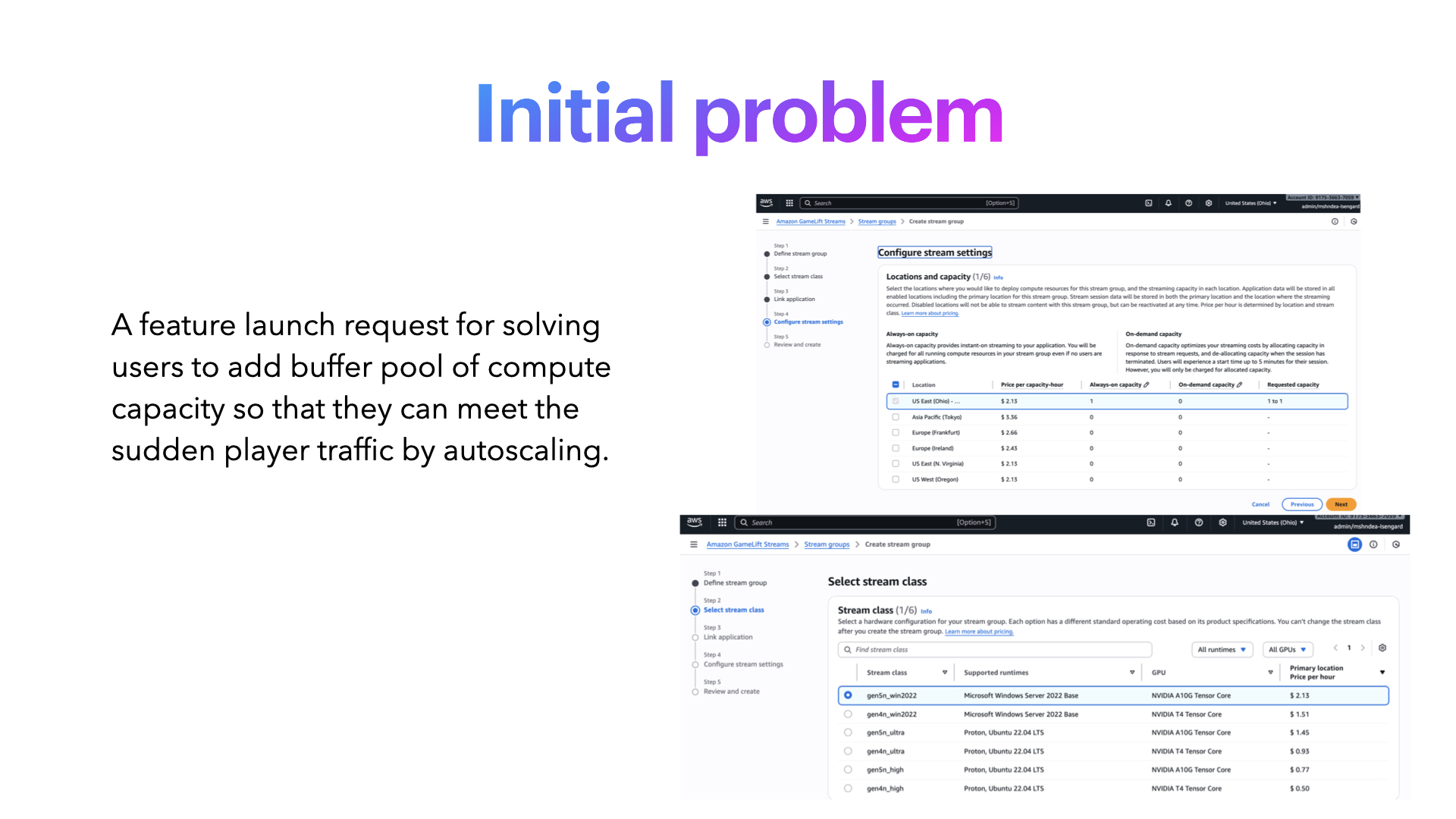
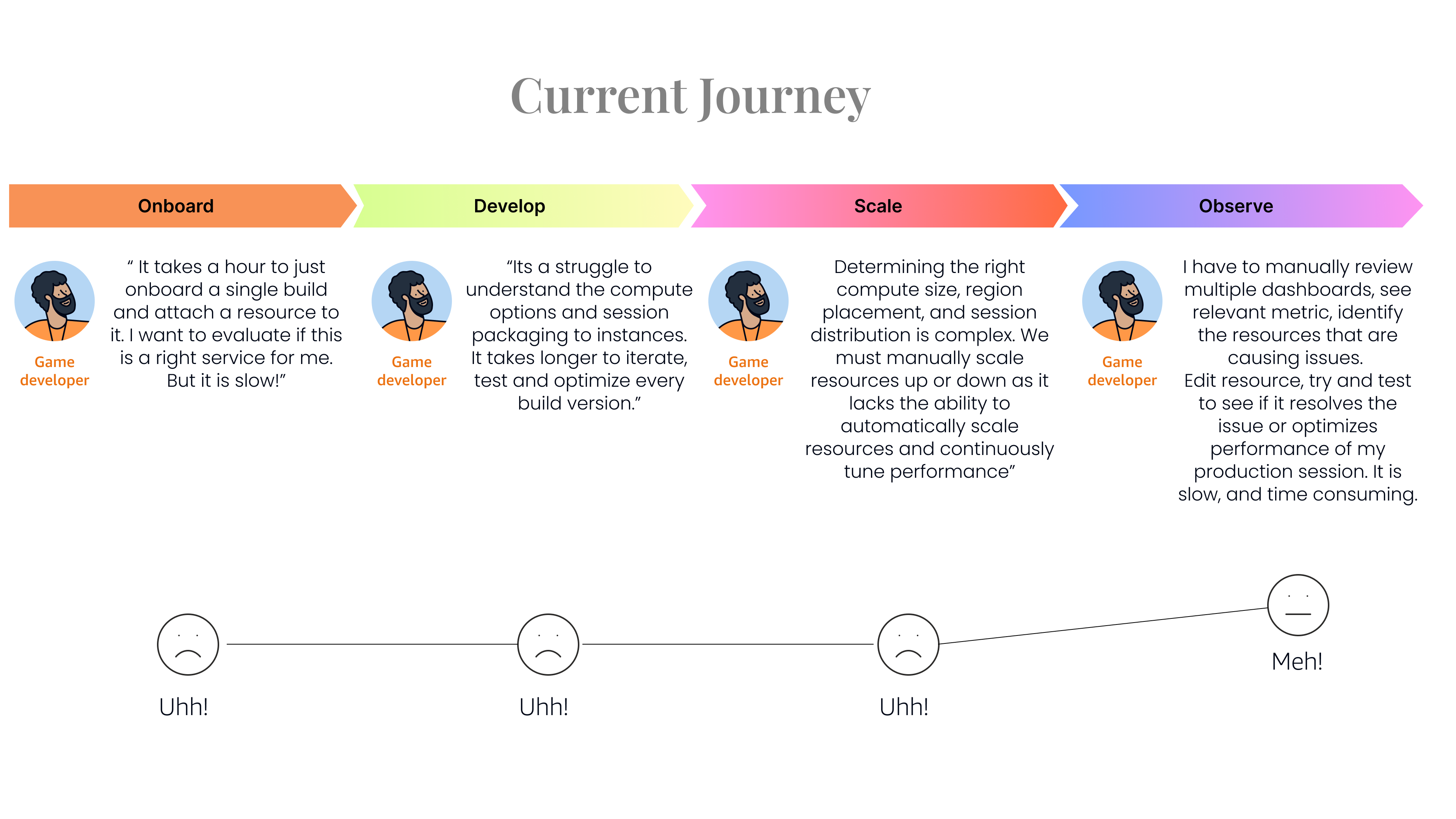
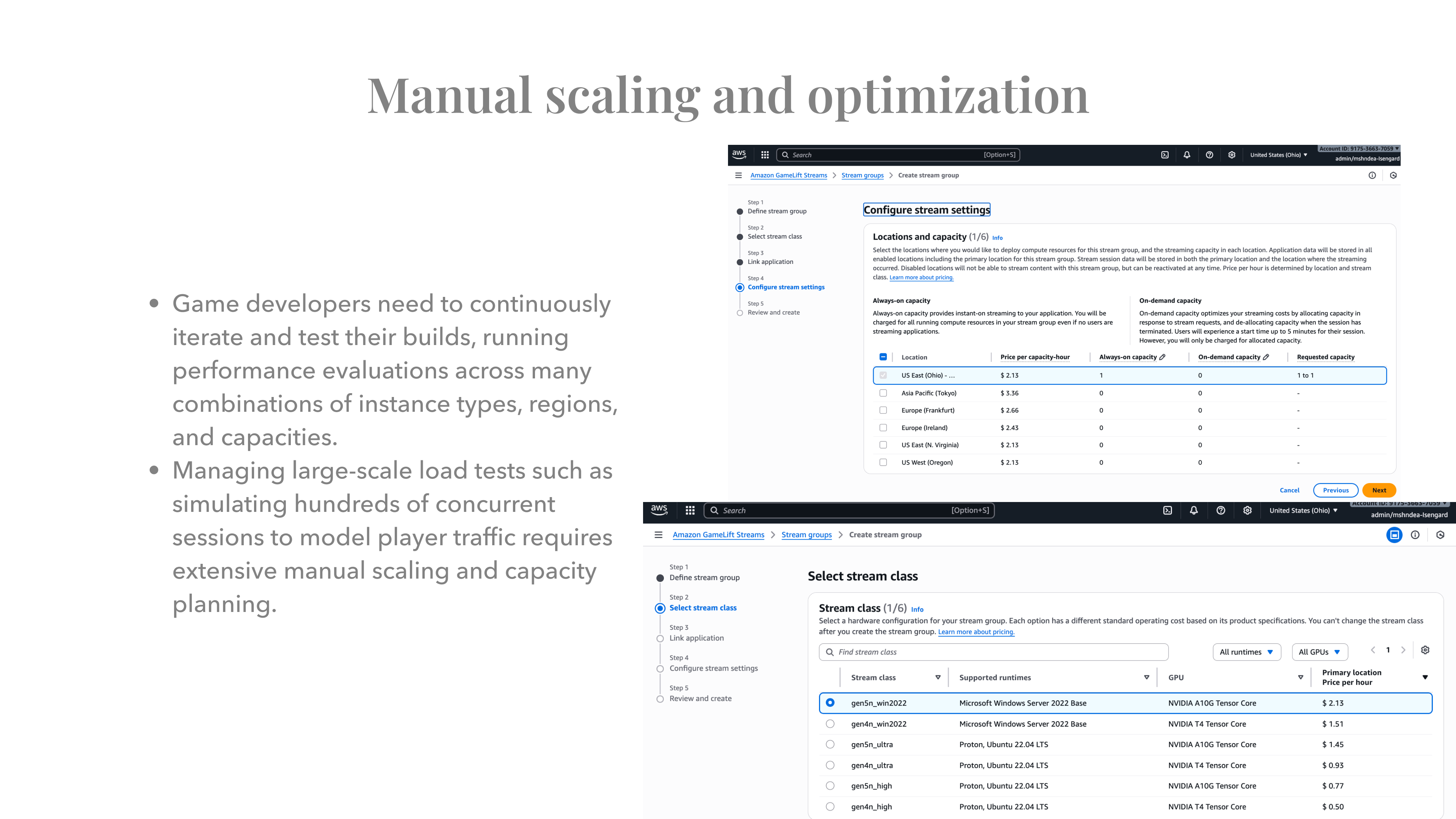
Manual infrastructure scaling for live multiplayer games breaks down under pressure. A operator/developer watches dashboards, guesses at capacity needs, does back-of-envelope cost math, and executes changes by hand often too late or too aggressively. Every decision is undocumented, unrepeatable, and unauditable. When traffic spikes from 1,000 to 100,000
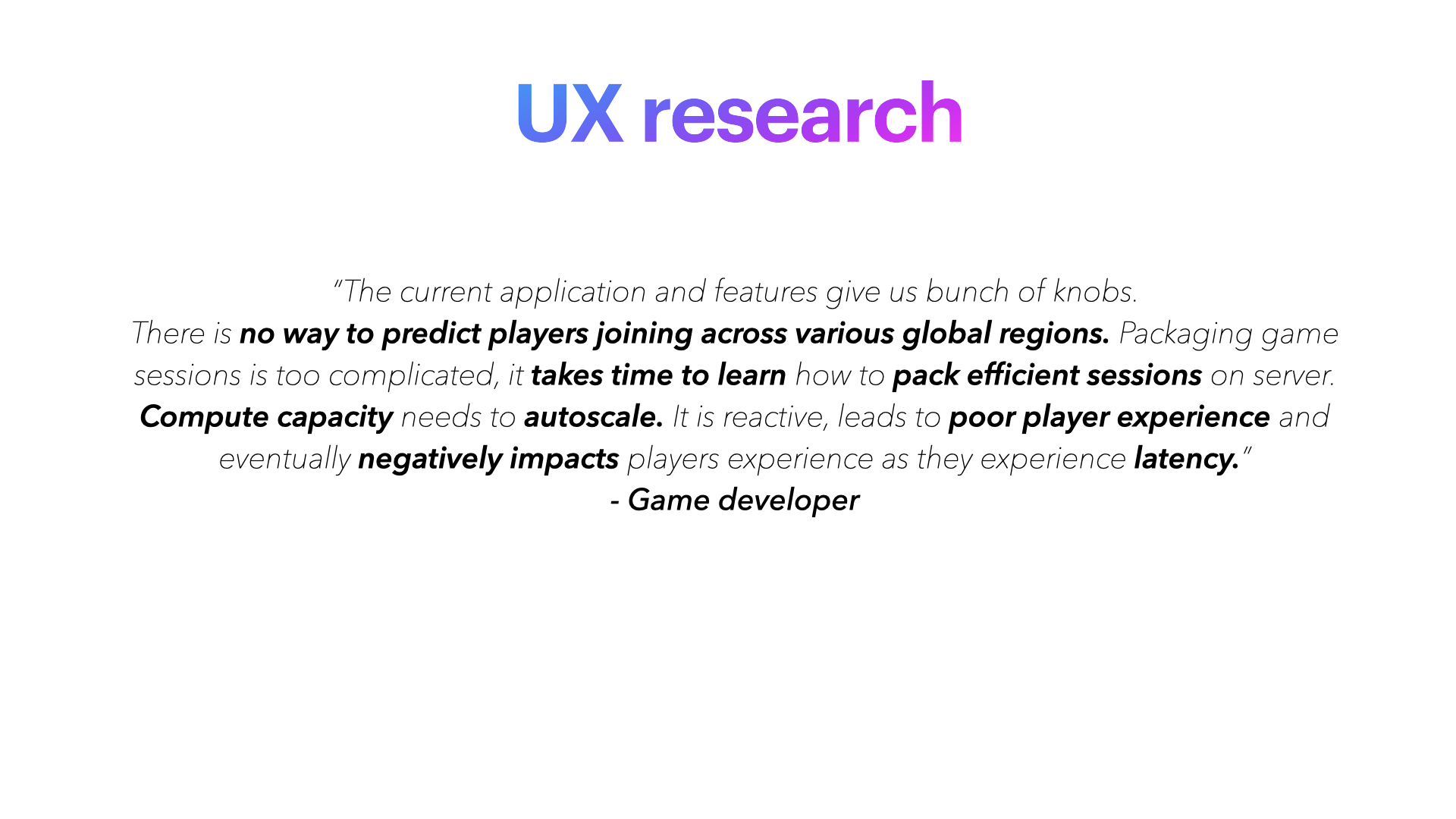
concurrent users in minutes, the gap between "I think we should add servers" and "here is the evidence, the cost, the risk, and the rollback plan" is the difference between a smooth launch and a queue-death spiral. The earlier workflow had no reasoning layer between metrics and action. No forecast. No structured recommendation. No policy gate. No simulation. Just a person, a dashboard, and a button.
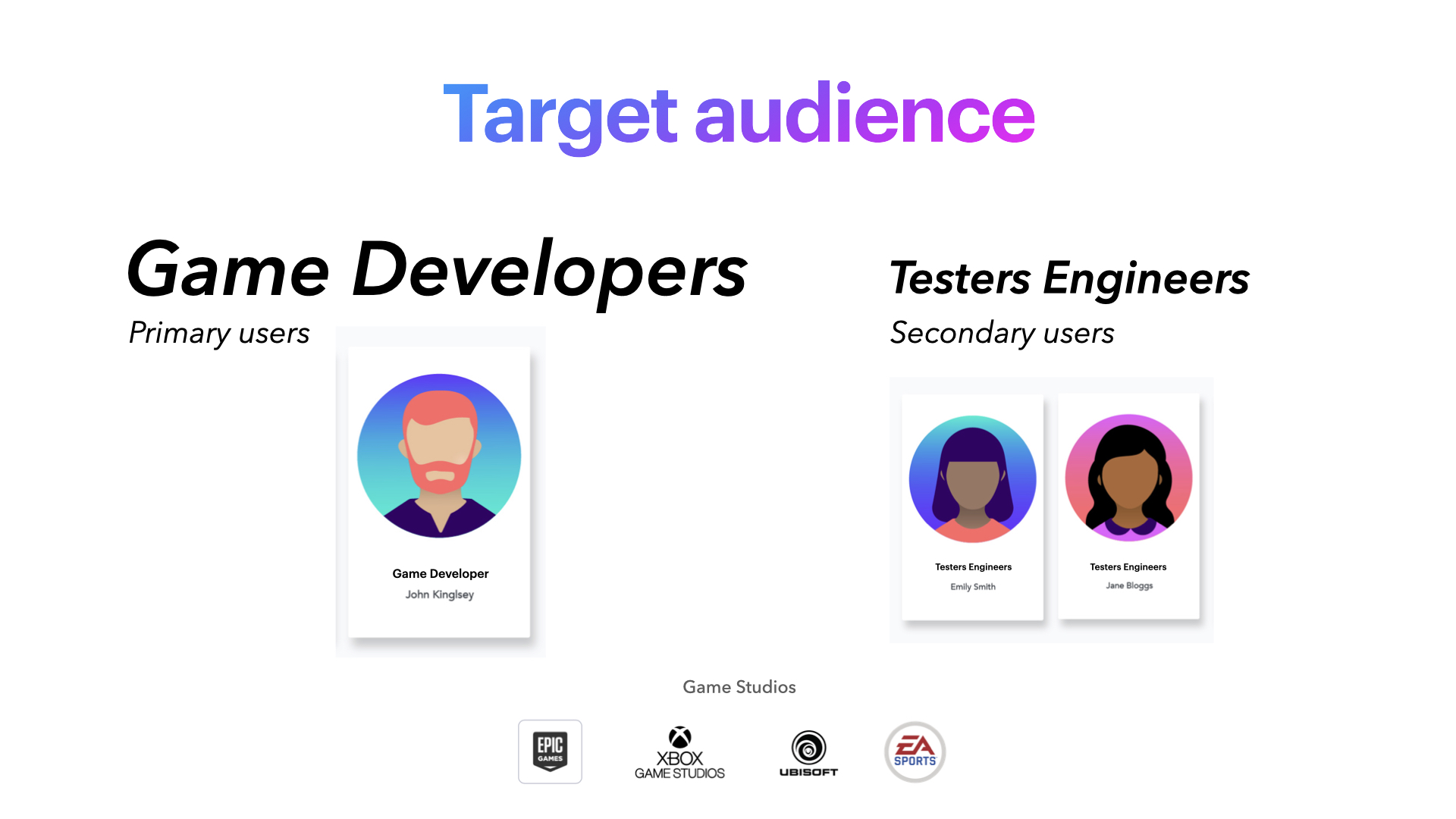
Game developers mental model:
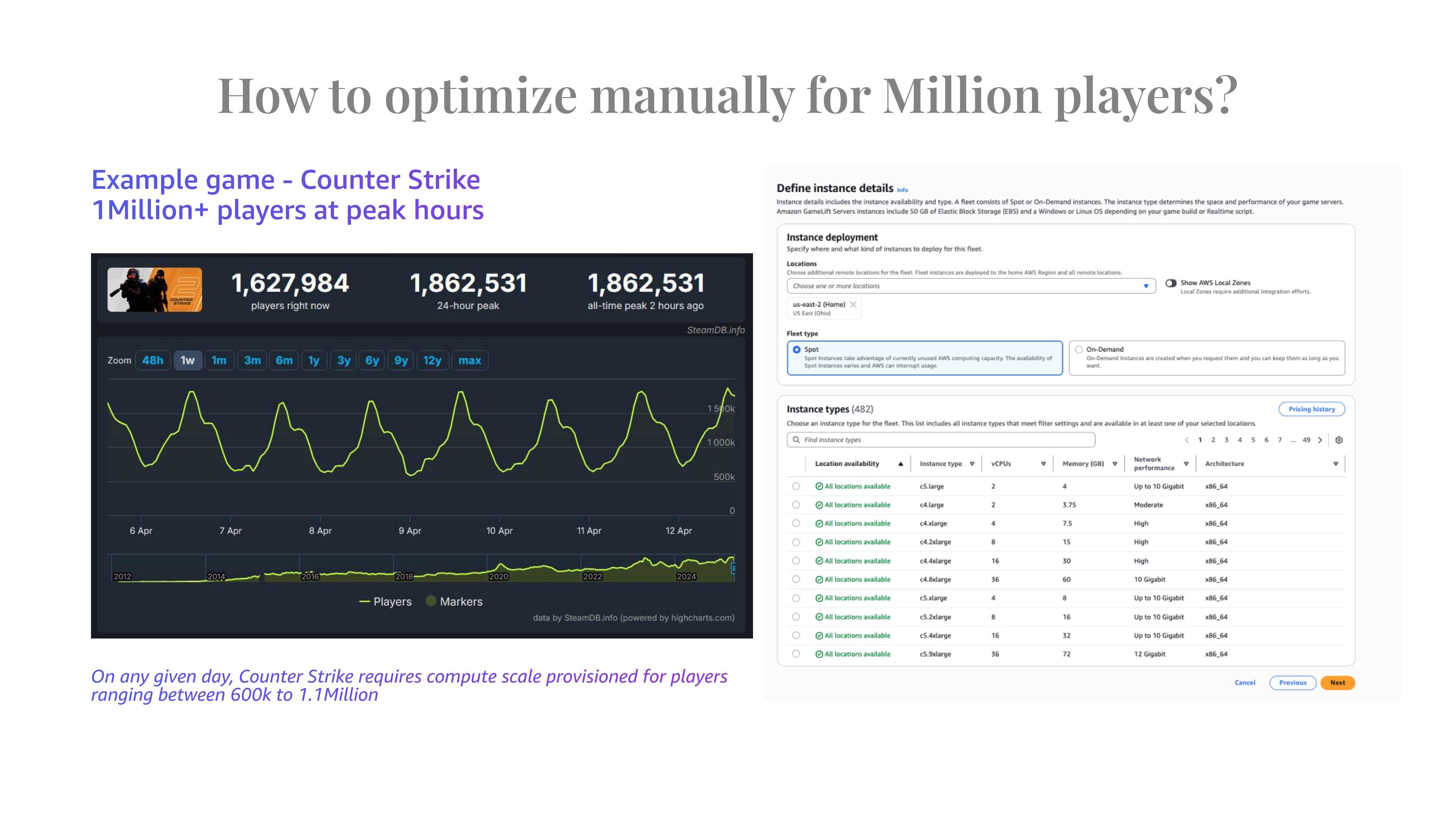
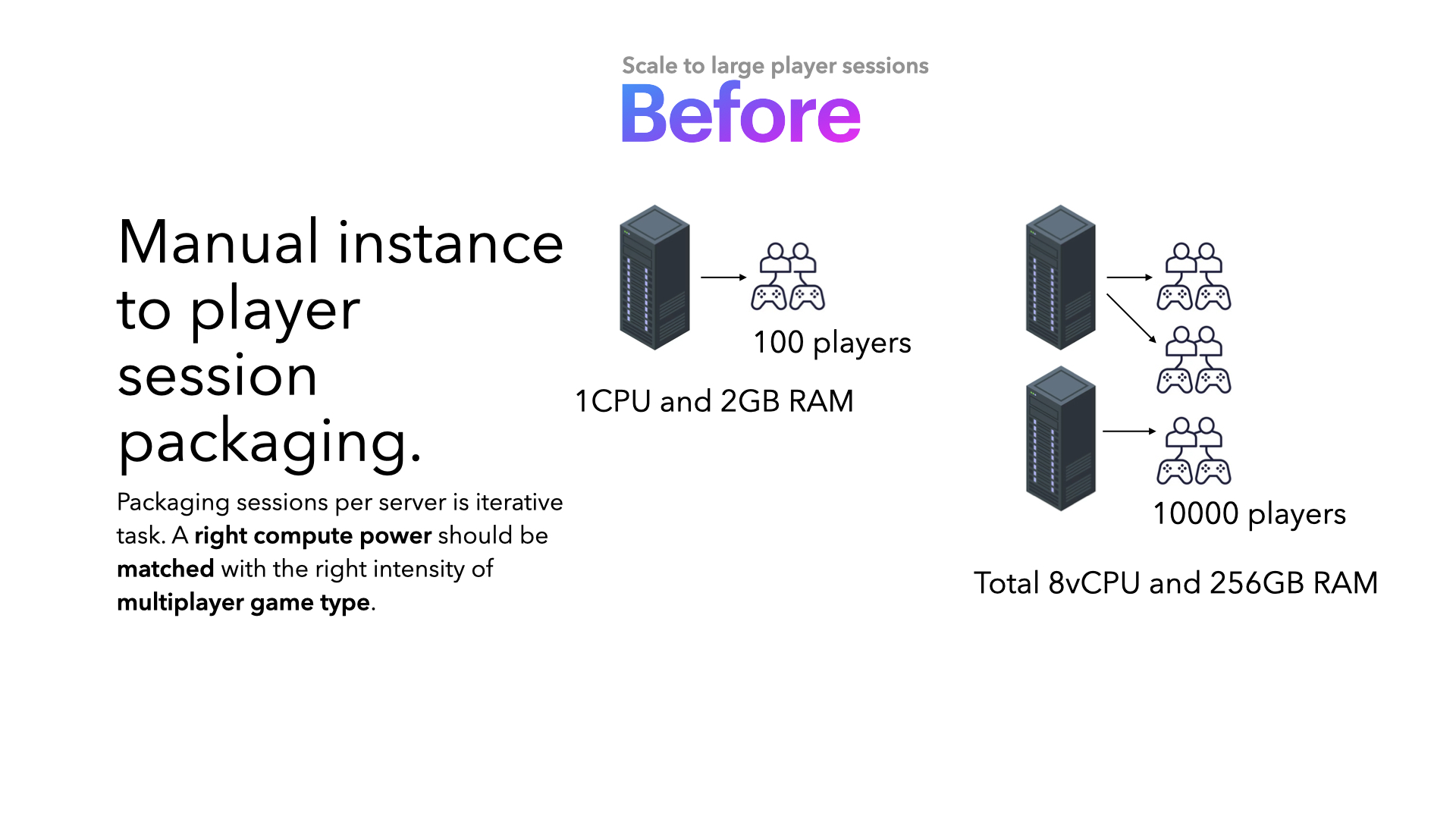
They have to orchestrate numerous high value, high stakes decisions in real time. They build up the game anticipating the concurrent player surge on game launch day, iteratively build game that runs seamlessly on cloud by setting up instances that has vRAM and CPUs. Also consider projected players, cost of running instance on cloud to support the #players CCUs, scaling the instances ,optimizing the server performance, improve the latency and enhance player experience.
Simulation agent
The digital twin is the load-bearing design decision. Instead of testing against real AWS infrastructure (expensive, slow, non-deterministic), the entire fleet is simulated: an in-memory fleet model with realistic provisioning lead times, a cost model that prices instances per hour, and a trace player that replays golden traffic scenarios — including the 1k-to-100k viral spike on compressed time.The simulator makes the system real, free, deterministic, and demoable. The agent, policy engine, and audit log are all production-shaped code running against simulated infrastructure. The same trace always produces the same conditions, so the evaluation framework actually works.
Impact: Zero AWS bill during development. Every edge case is reproducible on demand. A reviewer can trigger the viral spike in a 90-second demo and watch the full agent loop fire.
"This is extremely powerful for our developers to control the performance and approve cost by live tracking, showcasing actual vs planned compute capacity. Our developers will benefit from having an ability that simulates how compute will scale at various player queue and server capacity scenarios"
- CTO, Large size game company.
Simulation enhanced
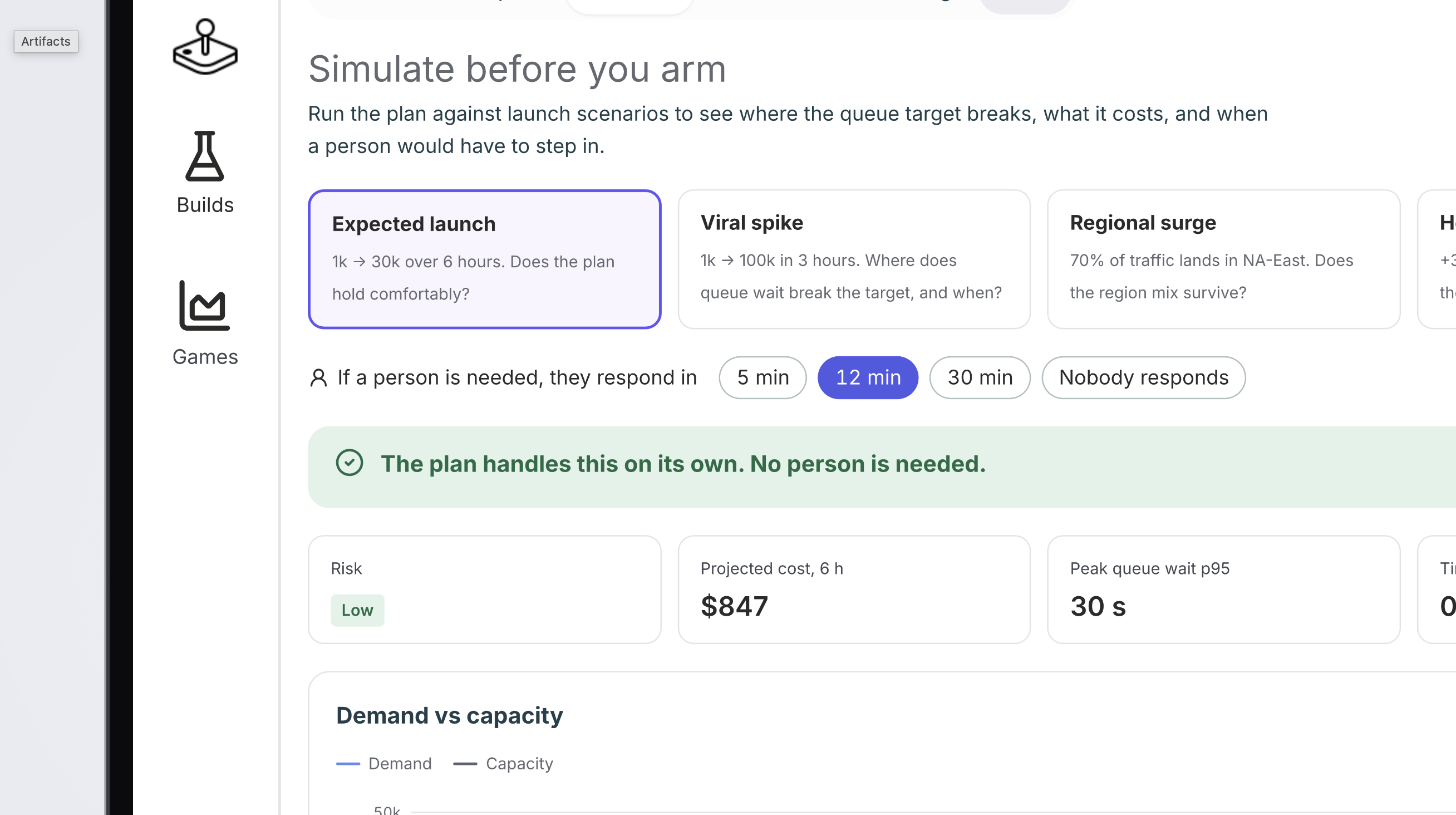
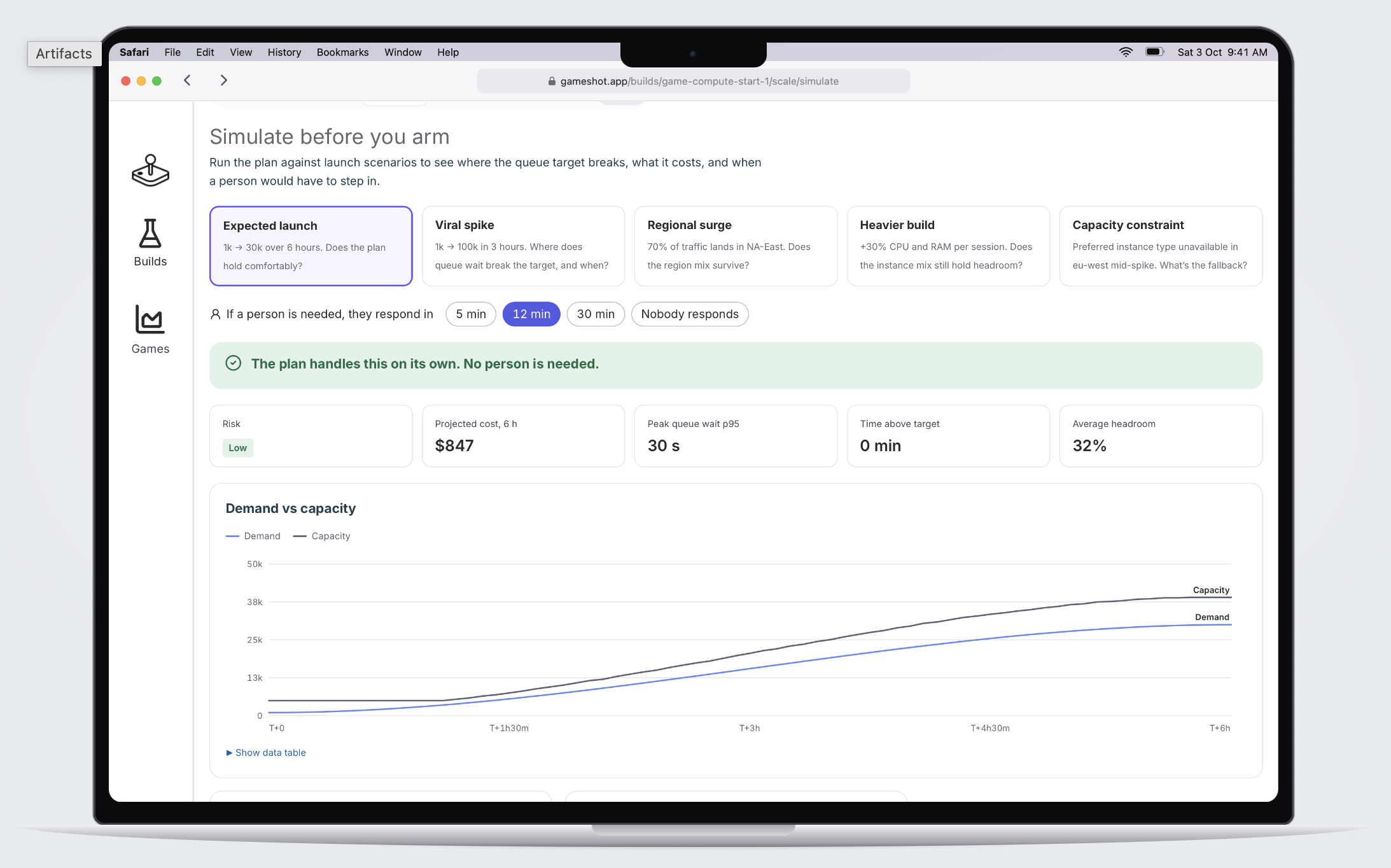
Scale Scenarios
Interface to visualize scenarios:
A. 1K > 10K in 6 hours
B. 1K -> 100K in 3 hours
C. What happens if 70% of traffic lands in NA-East?
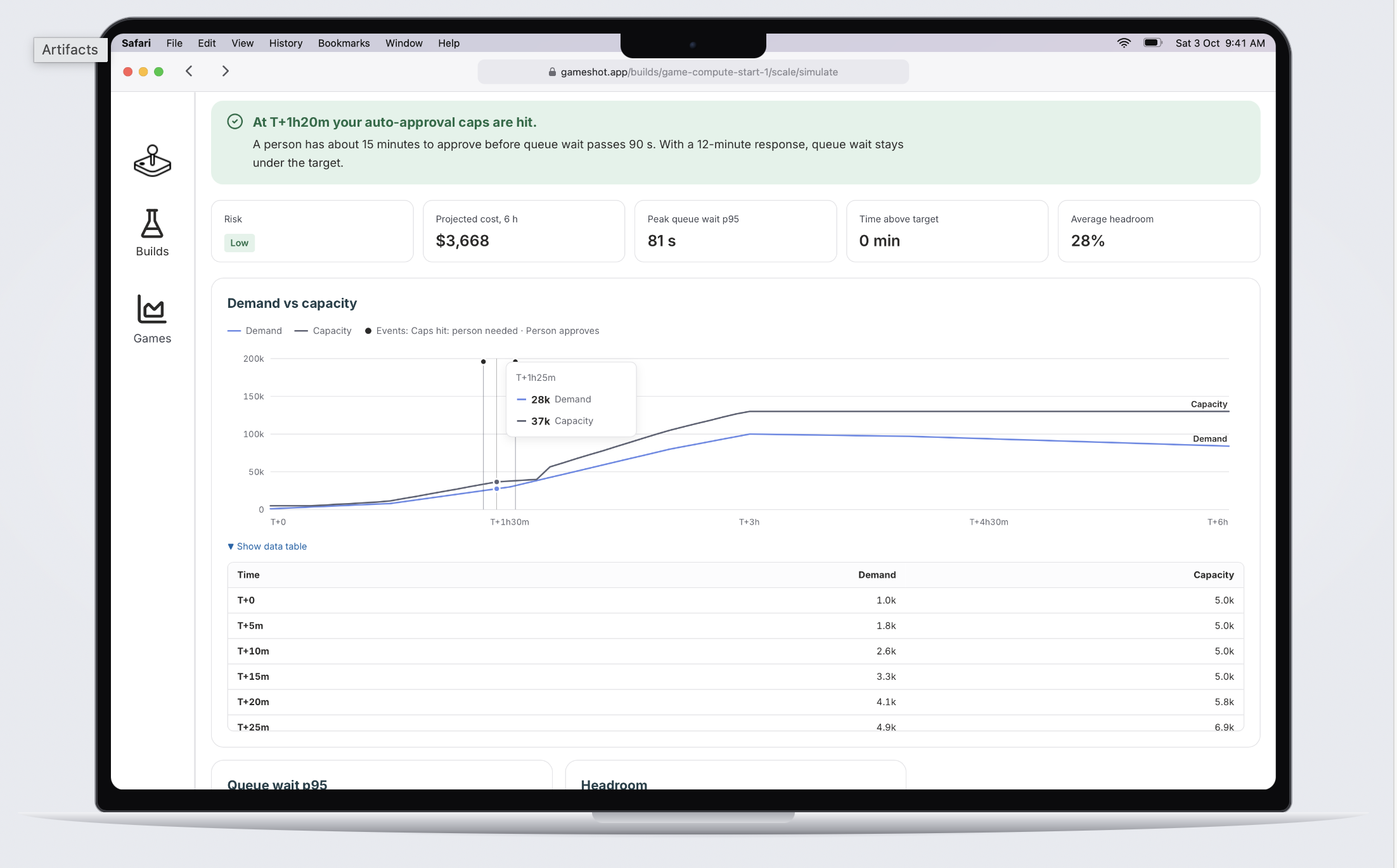
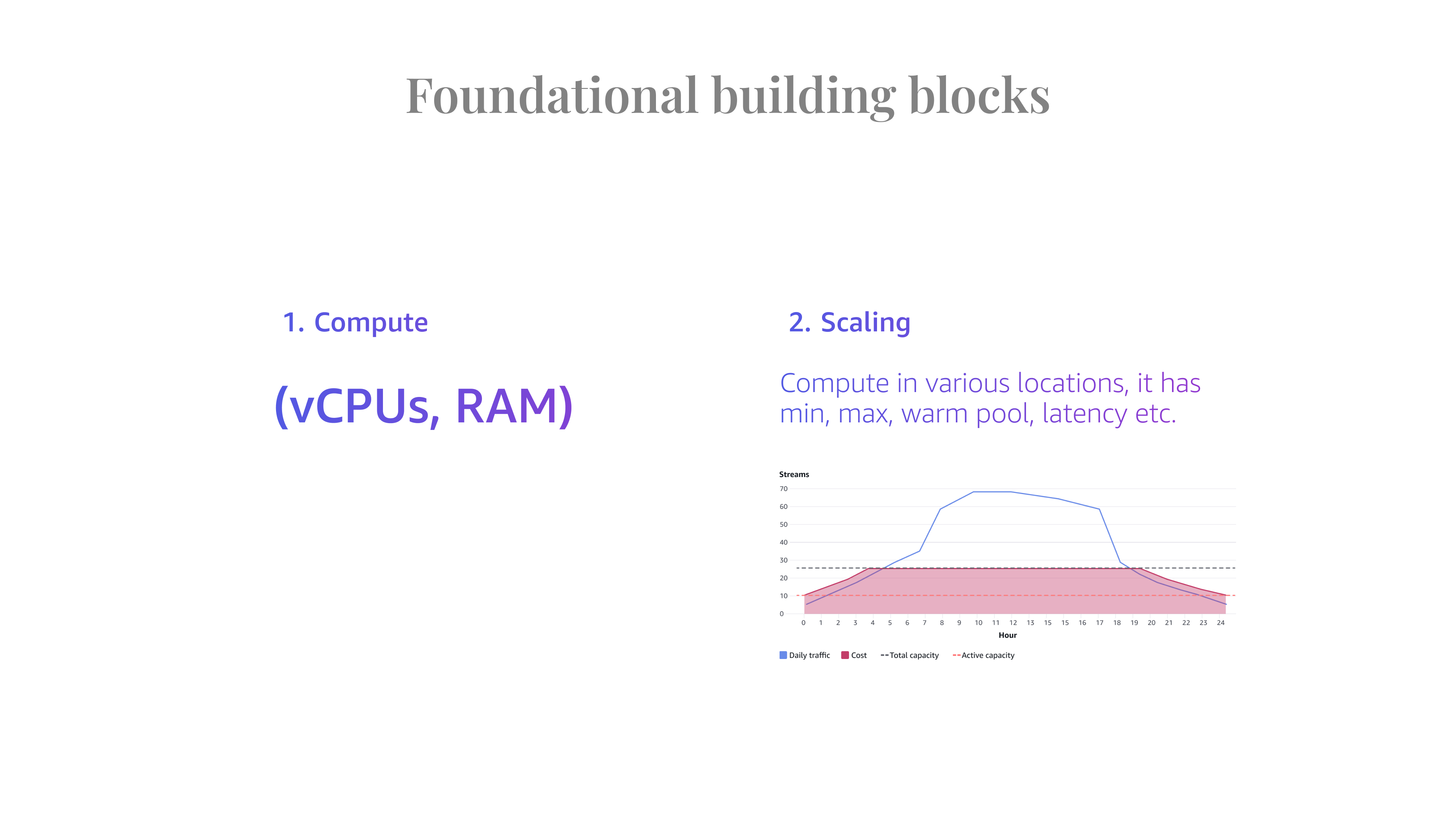
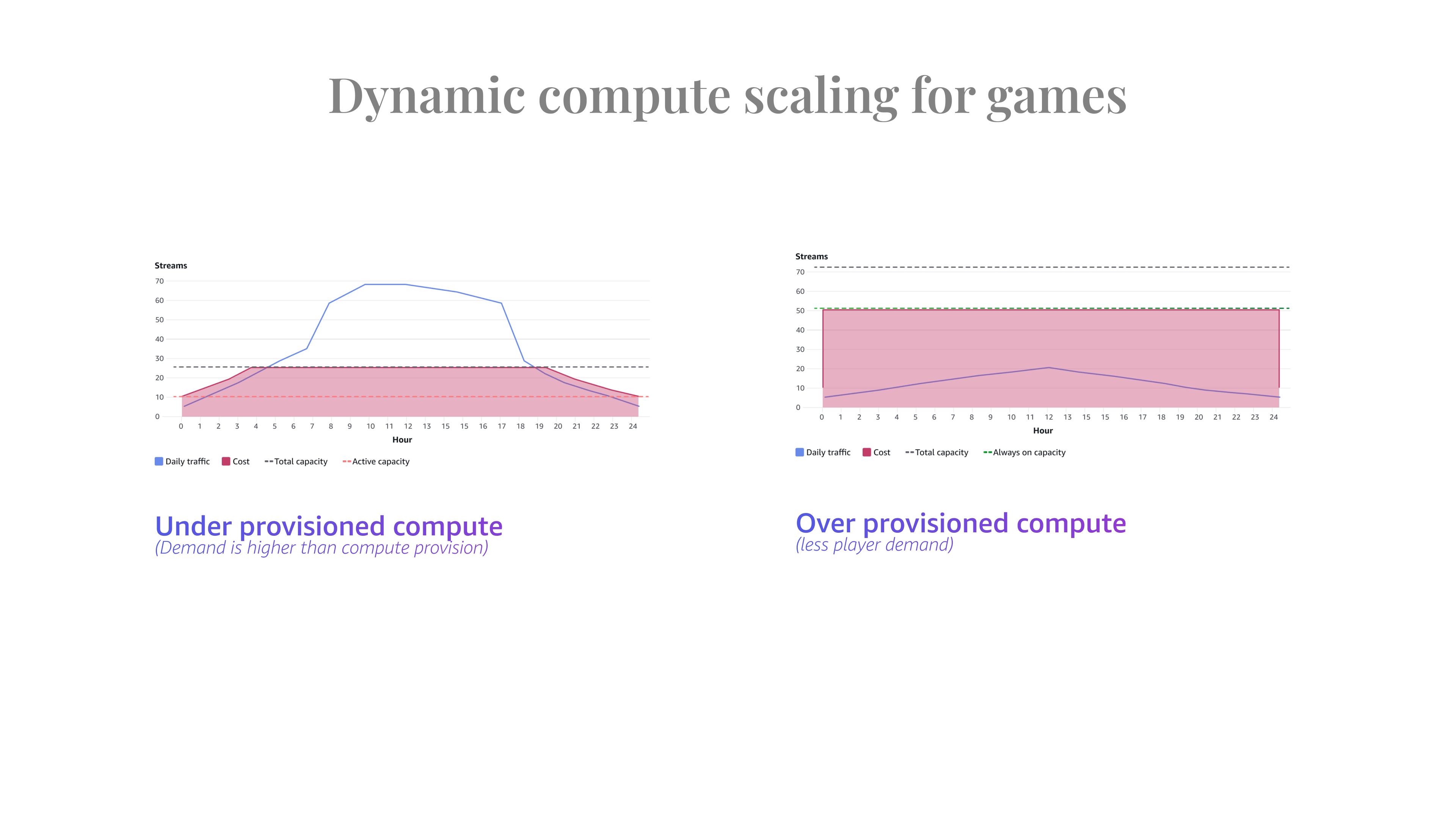
Demand vs capacity
Allow users to visualize Demand vs Capacity projections. Provision of granular demand and capacity timely details.
Prediction on T+XXhrYYmin when the approval caps be hit.
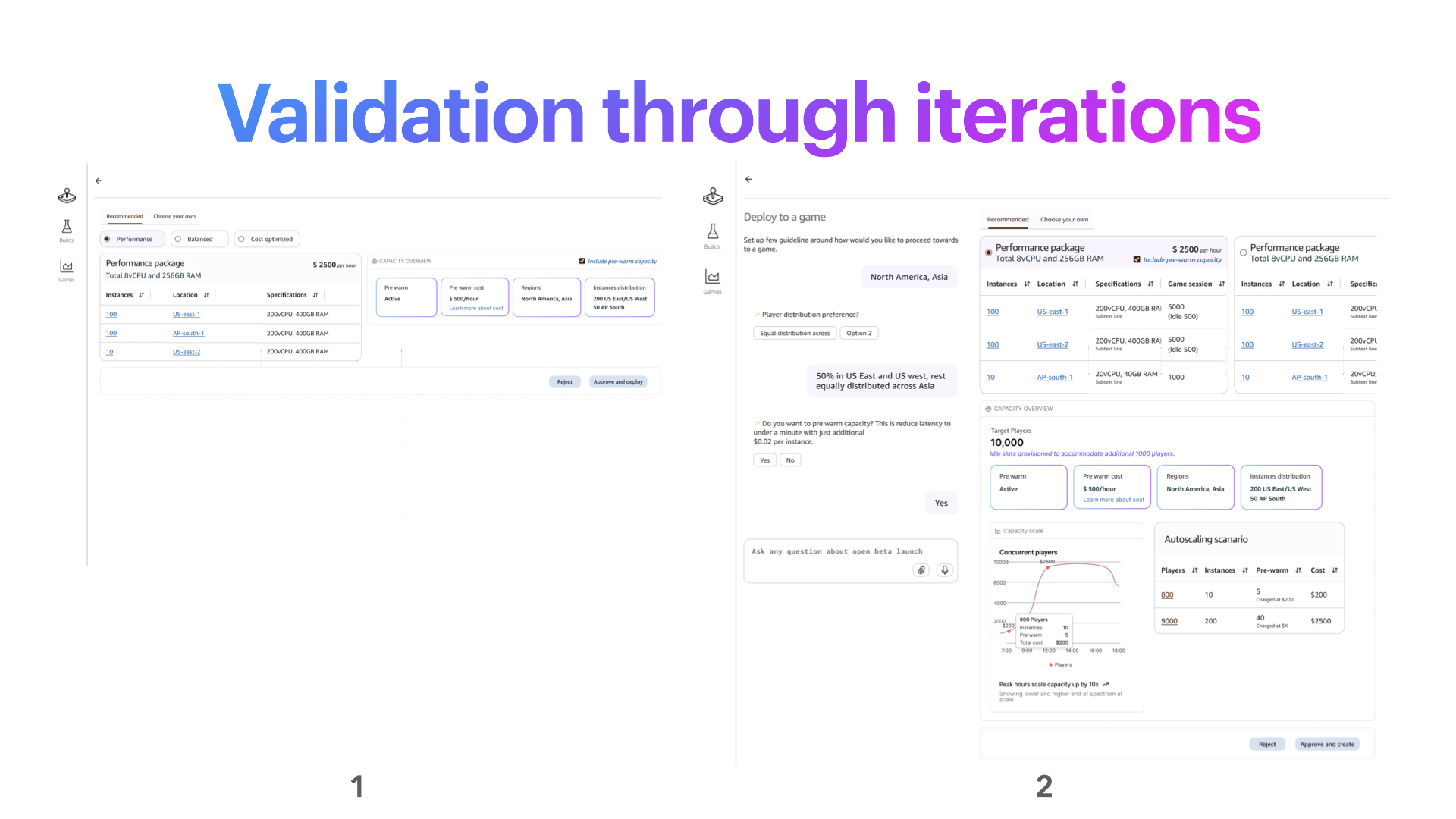
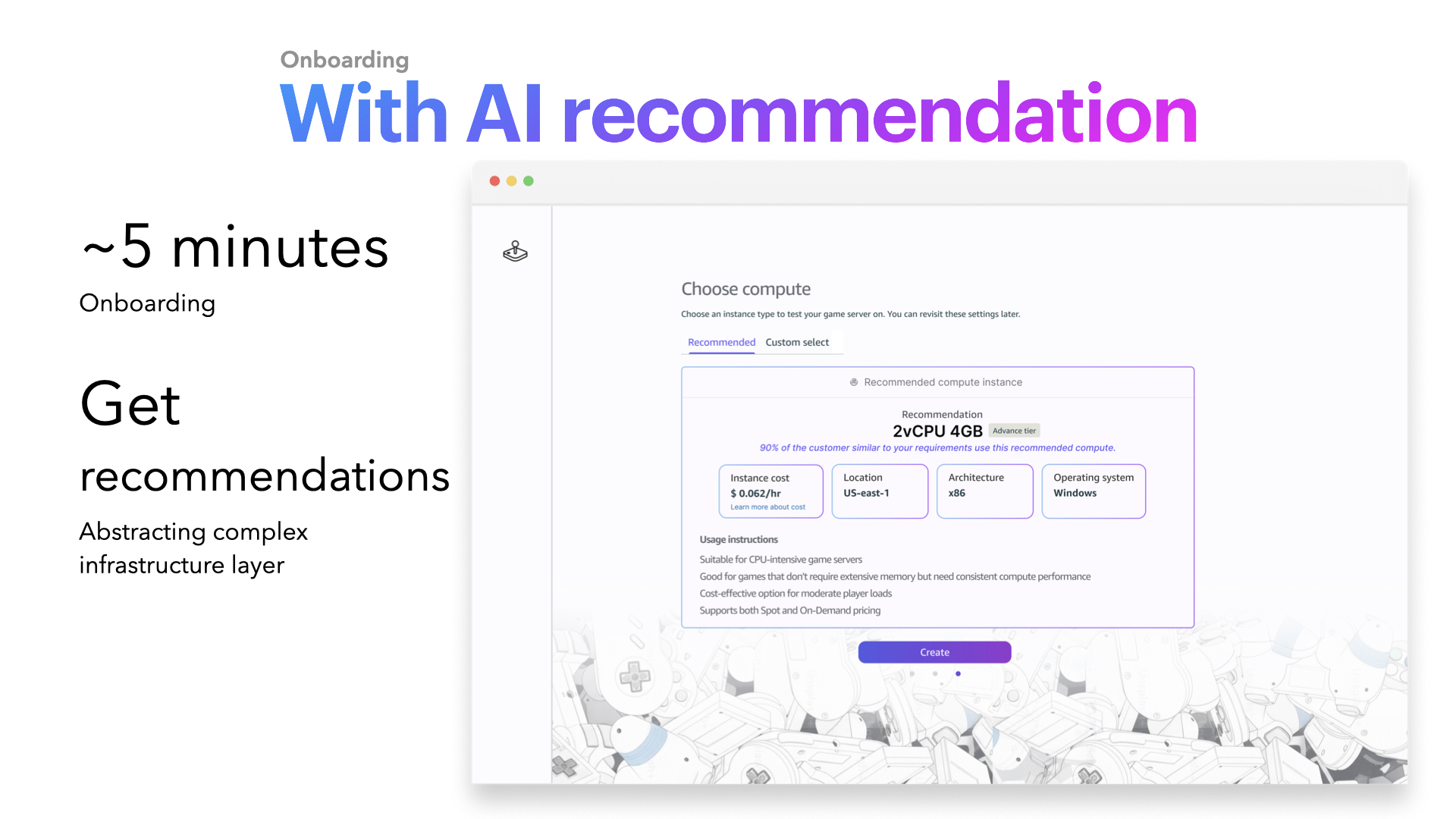
Recommended compute package

Simulate first
Game developers need to simulate different scenarios
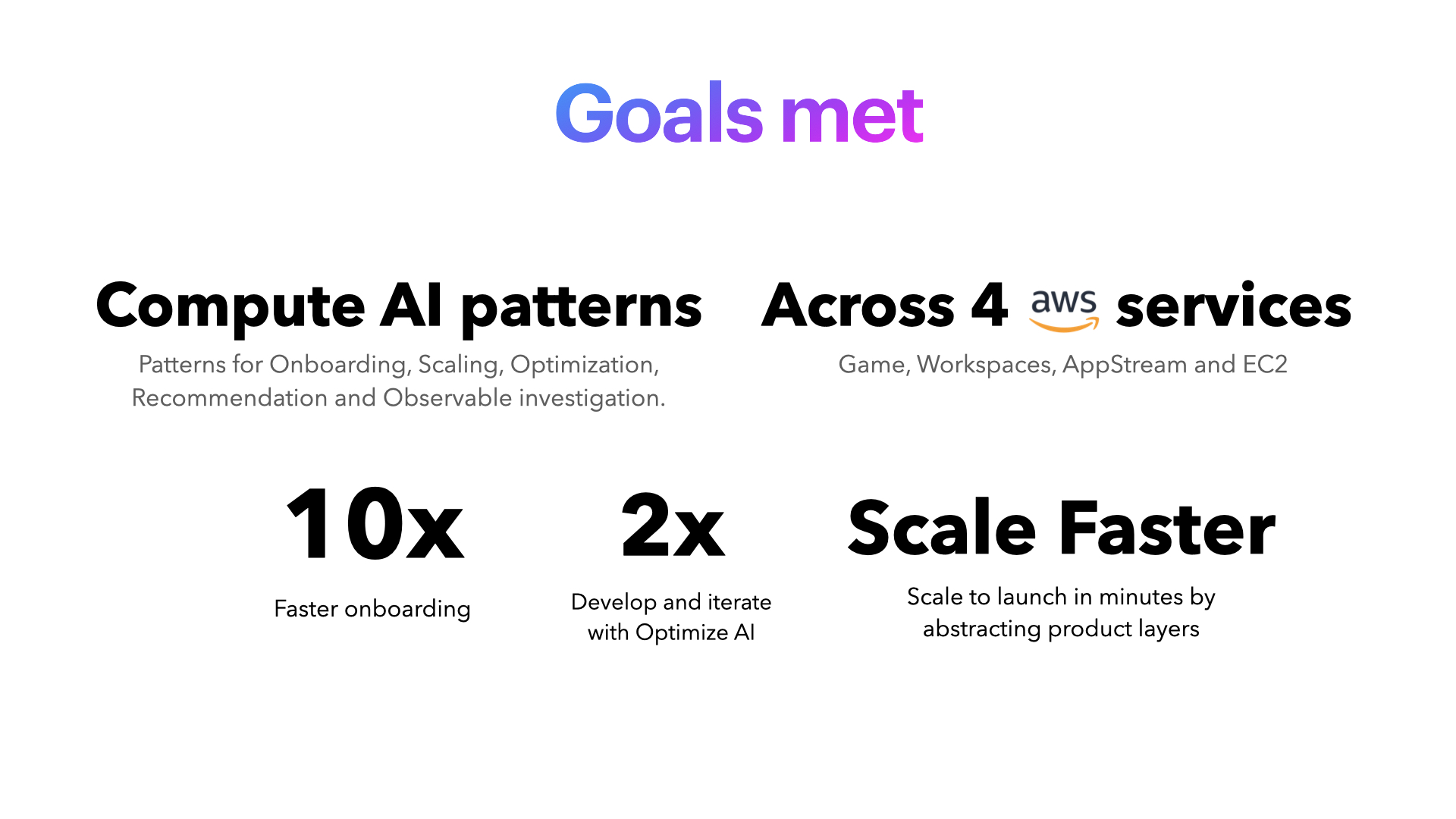
Game developers typically build up game from internal tests with 1-2 players, moving to beta, open beta, launch day. This requires hundreds of iterations, combinations. Till today developers struggled to simulate how compute would behave, and how the servers will respond in response to simulated surge in concurrent player. This is a gold capability when it comes for enterprises planning to launch games played by 100k players. Without this capability they would have to build their own bespoke solutions, but this new features would same them thousands of dollars.
Optimise enhanced
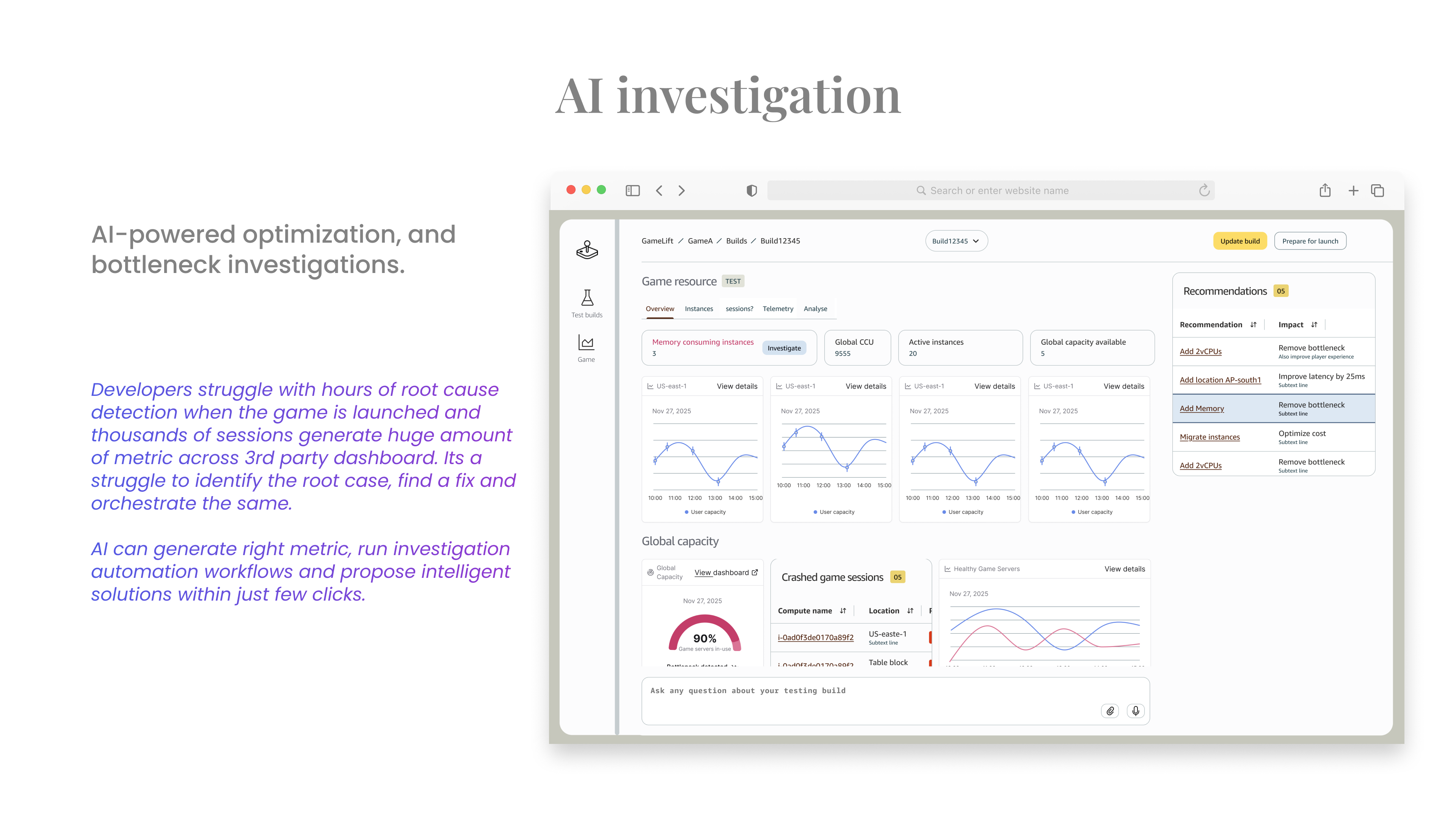
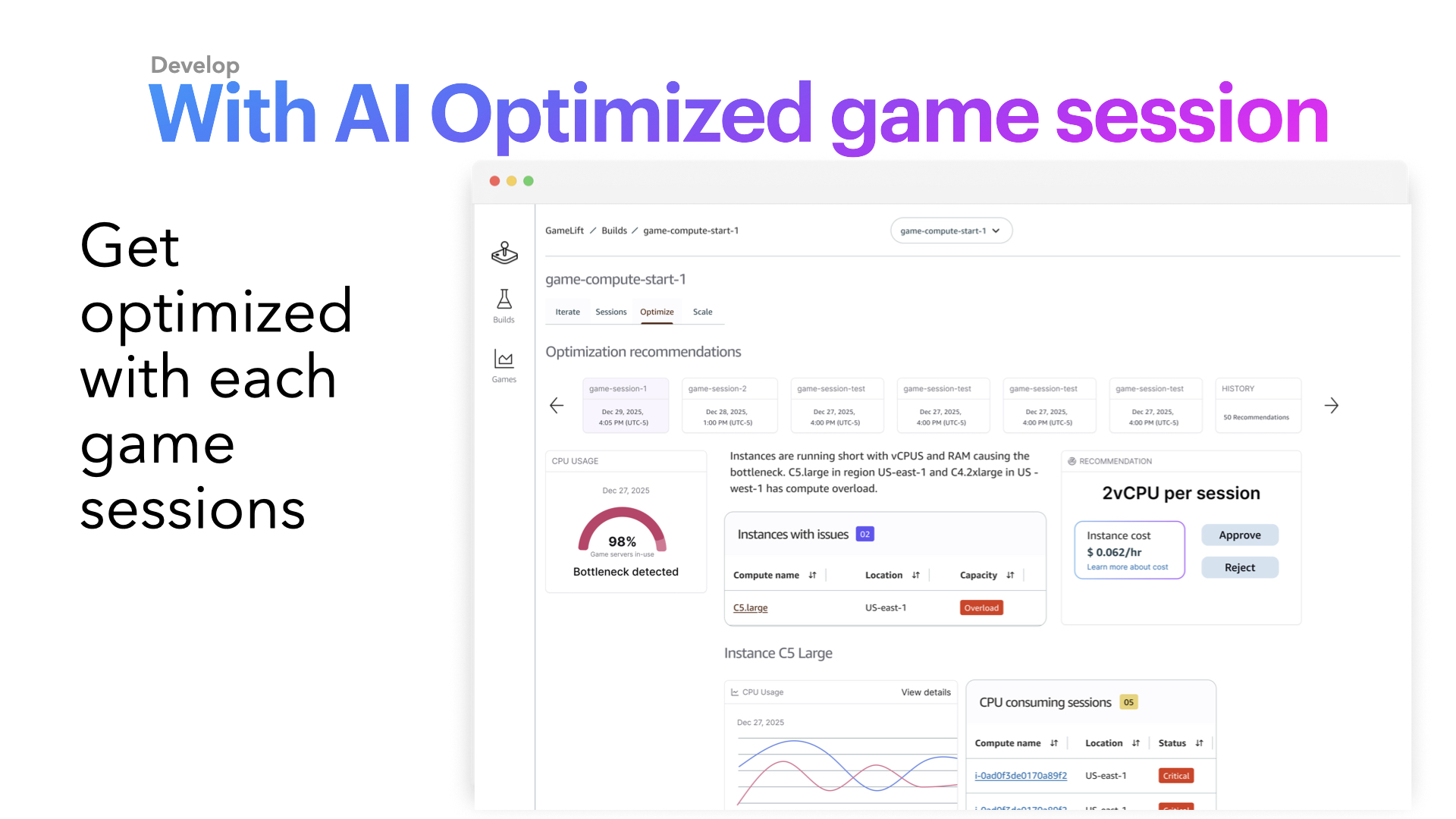
Game developers wanting to optimize each session run on cloud.
Every time a content or game session is run in cloud, the new capability will show user with the analysis of what is happening at the servers. Would the system able to sustain XX players? What would be the latency expected? What different CPUs provisions developers must do in order to match a predicted demand? Should theyt be optimizing cost is the instances or servers are not being efficiently used?
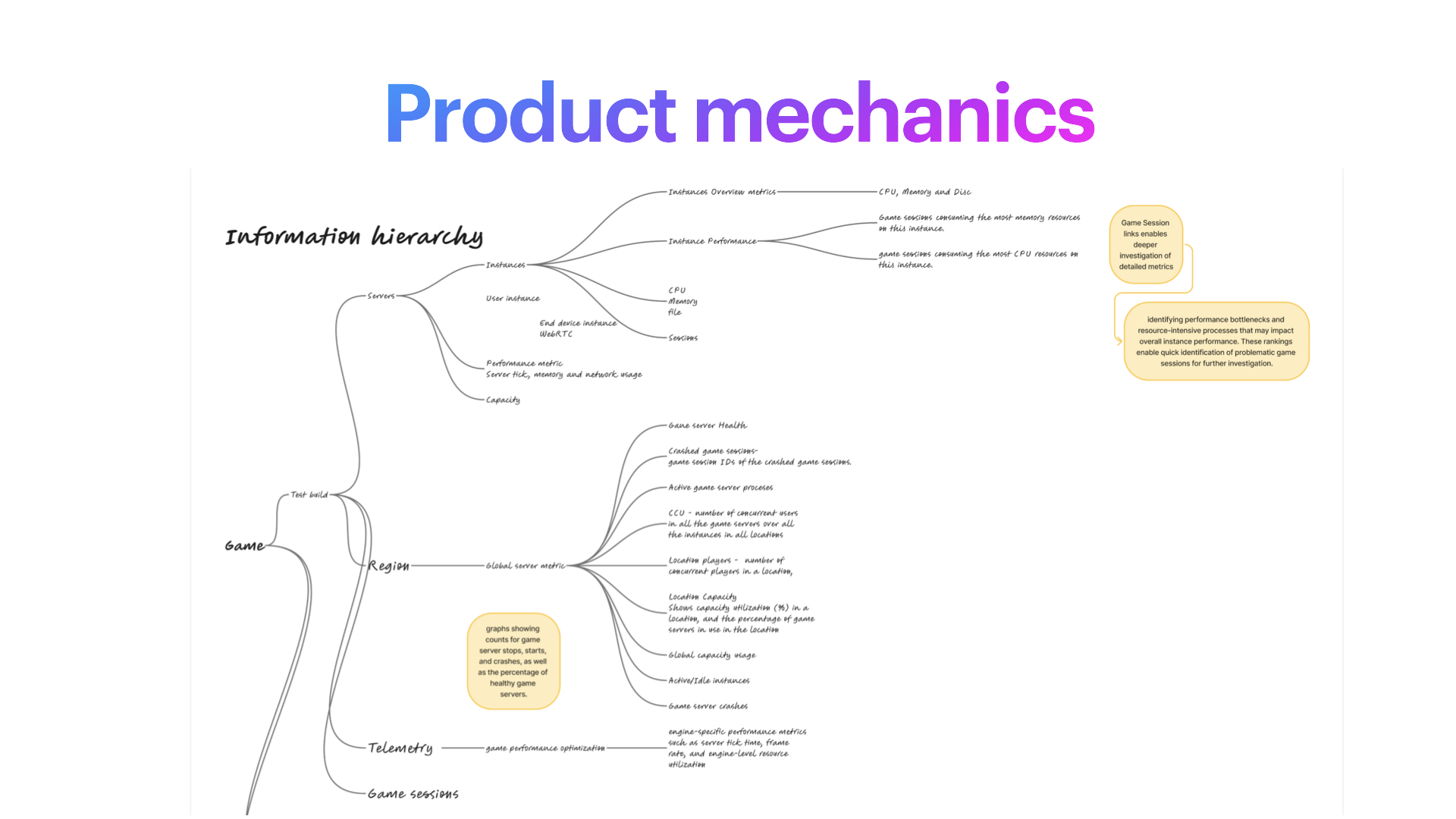
The new capability can show user with algorithms that are capable to surface the root cause, data signals, comparison of recommended instance along with cost. The AI would access the RAG files that has the ruleset, algorithm to analyze on why a RAM and vCPU combination will work best for a given game session. The algorithm has many variables to consider, such as session packing on an instance, game rendering, number of concurrent players, latency, CPU and memory consumption and many more. The user has authority to approve, modify or defer it. The modification data keeps improving the AI agent over time.
Conversation AI Interface
Conversational AI that lets users to provide context, guardrails for their content to be launched. The AI would provision compute resources with smart packages of instances, vCPUs and RAM with Autoscaling features, cost optimization. This feature saved game developers approximately 85% of development work each week.